56# Fully‑Refined Paraffin Wax

    • Product Name: 56# Fully‑Refined Paraffin Wax
    • Factroy Site: No. 45 Fengxiang Road, Xinfu District, Fushun City, Liaoning Province
    • Price Inquiry: sales4@ascent-chem.com
    • Manufacturer: PetroChina Fushun Petrochemical Company
    • CONTACT NOW
    Specifications
    HS Code 319571
    Color Saybolt +30
    Odor Odorless
    Watersolubleacidsoralkalies Absent
    Mechanicalimpuritiesandmoisture Absent

    As an accredited 56# Fully‑Refined Paraffin Wax factory, we enforce strict quality protocols—every batch undergoes rigorous testing to ensure consistent efficacy and safety standards.

    Packing & Storage
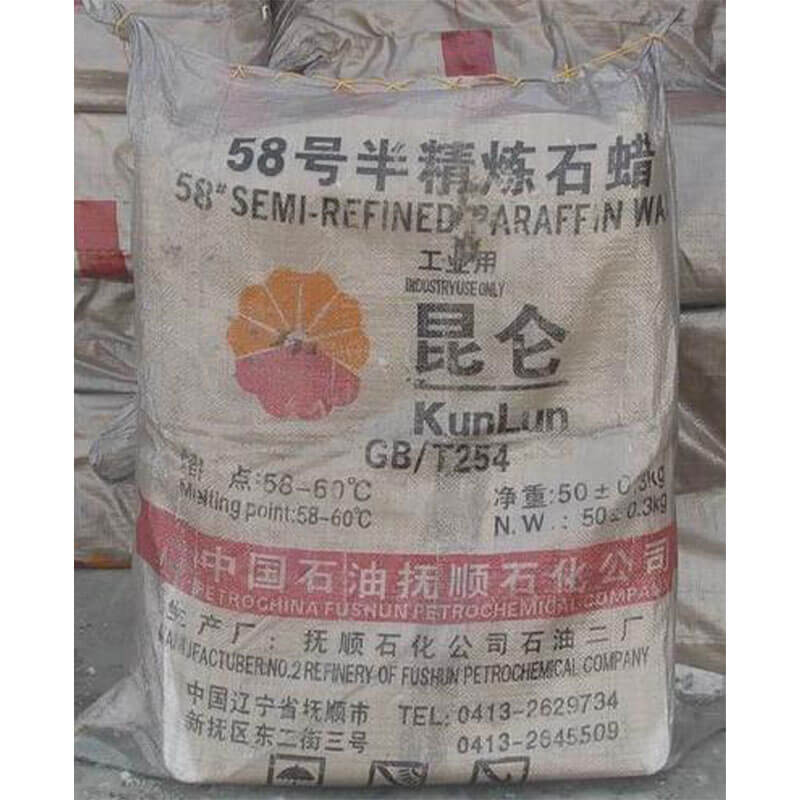
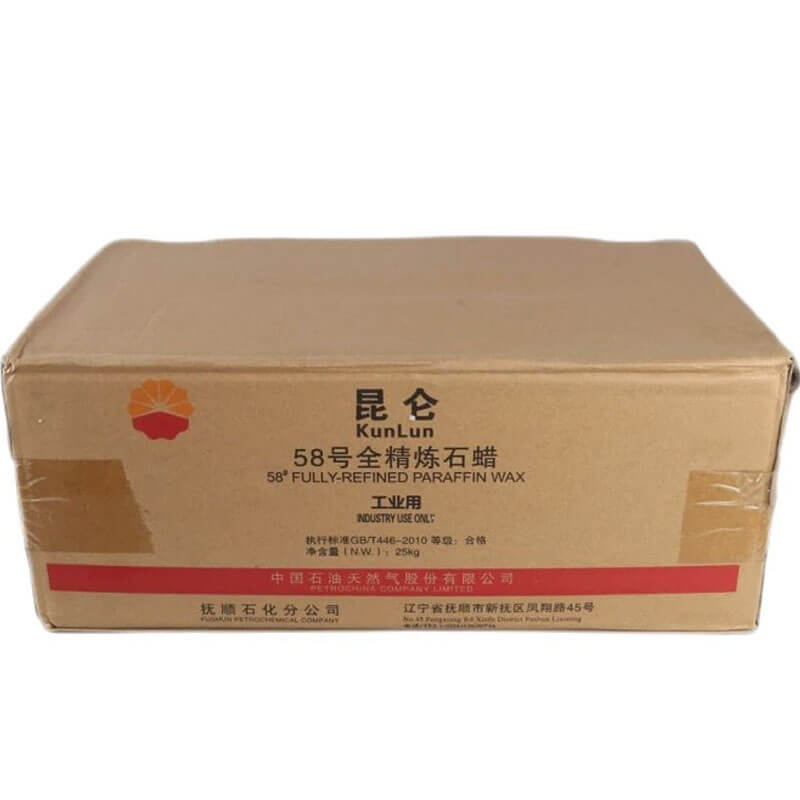
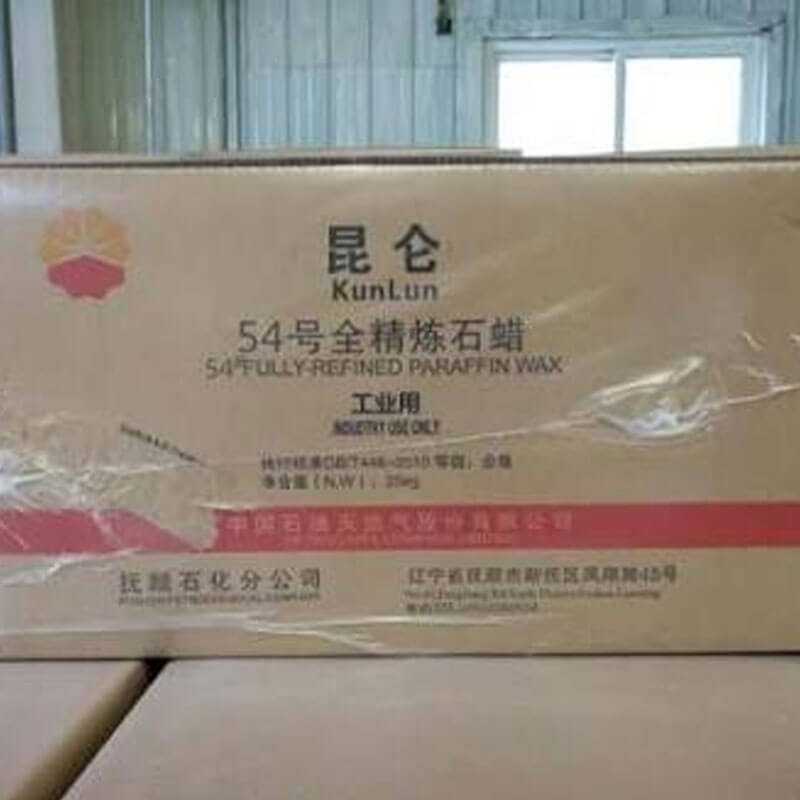
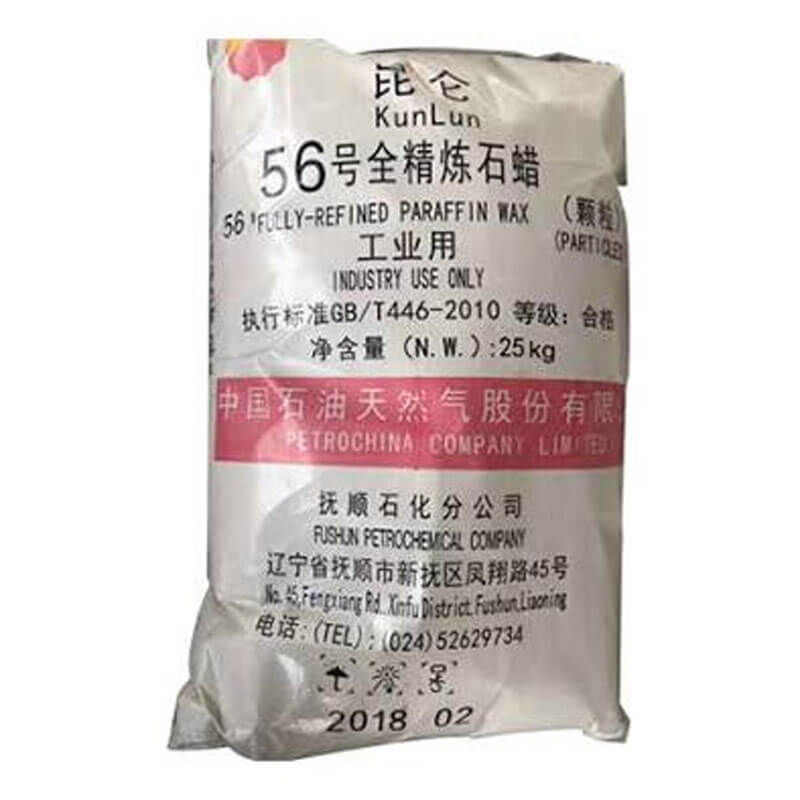
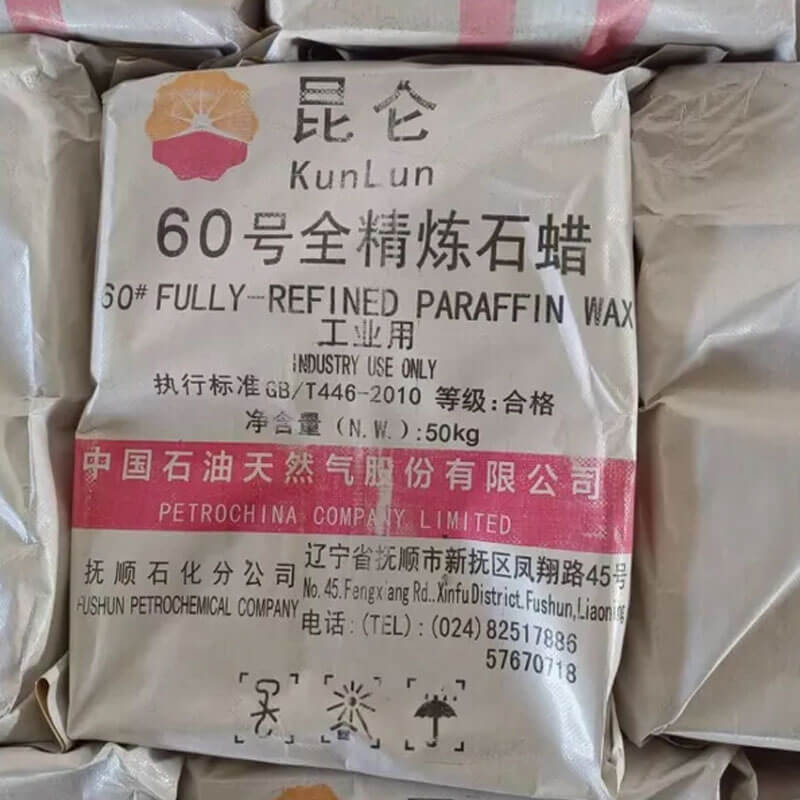
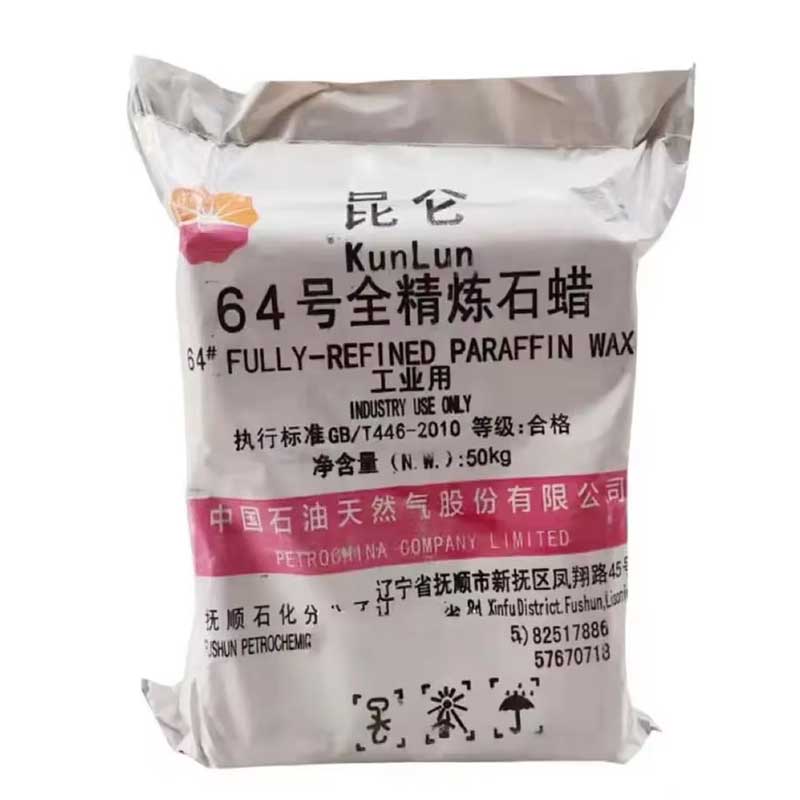
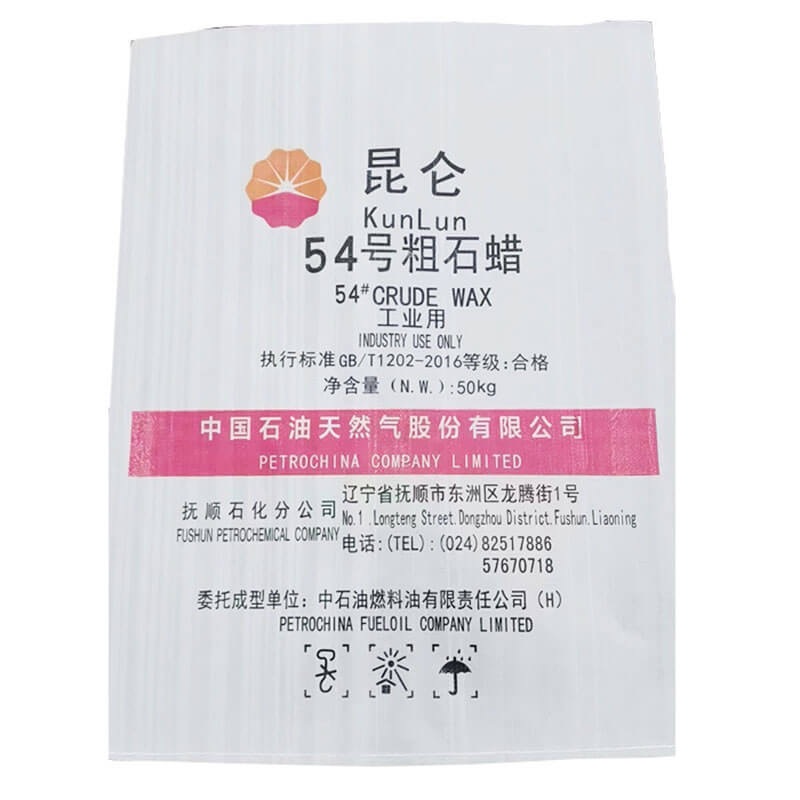
    Packing 56# Fully-Refined Paraffin Wax is supplied in 25 kg multi-wall paper bags, clean and odorless, for easy handling and storage.
    Container Loading (20′ FCL) 20′ FCL loaded with palletized 56# fully-refined paraffin wax, properly secured and stowed for safe, efficient transport.
    Shipping 56# Fully-Refined Paraffin Wax ships as a non-hazardous solid, typically in 25 kg bags, cartons, or palletized slabs. Keep away from heat and open flames; store in a cool, dry area. Standard dry containers or covered trucks are suitable, with no special temperature control required.
    Storage Store 56# Fully-Refined Paraffin Wax in a cool, dry, well-ventilated area away from direct sunlight, heat sources, and open flames. Keep containers tightly sealed to prevent contamination and moisture absorption. Maintain moderate temperatures to avoid softening or deformation. Separate from strong oxidizers and incompatible materials, and follow all local storage regulations.
    Shelf Life Stable when stored cool, dry, and away from sunlight; typical shelf life is 2 years. Keep container sealed.
    Application of 56# Fully‑Refined Paraffin Wax

    In container candle production, 56# fully-refined paraffin wax is typically blended at 70–85 wt% with 5–15 wt% microcrystalline wax, 2–5 wt% stearic acid, and 6–9 wt% fragrance oil to balance hardness, surface finish, fragrance retention, and flame height. The incoming wax requires a melting point of 54–58°C per ASTM D87, oil content not more than 0.5 wt% per ASTM D721-17, and a Saybolt color of +28 minimum per ASTM D156 to prevent yellowing and wick clogging in pale, dye-free candles. The blend is heated in a steam-jacketed or electrically heated vessel to 75±5°C; molten fragrance is incorporated under low-shear agitation, and the melt is poured into tempered glass containers at 60–70°C. Cooling tunnels are maintained at 20–24°C with top-down airflow to reduce sinkholes and internal shrinkage. After pouring, a 24–48 h cure period at 20–25°C is required for the paraffin crystal network to fully anneal, which directly affects surface hardness measured by needle penetration per ASTM D1321. Wicking trials on production runs assess soot formation, burn rate, and flame height under ASTM F2417-17; acceptable burn rate and soot thresholds are set by customer specification because published data for this exact wax–fragrance system is limited. For low-smoke formulations, blends with 5–10 wt% vegetable-derived hydrogenated triglyceride are substituted for part of the paraffin, but the fully refined wax remains the primary crystalline backbone. Terminal products include scented container candles, pillar candles, and wax melts, where batch-to-batch variation in oil content greater than 0.2 wt% is observable as surface mottling and reduced hot-tack strength in molded forms.

    What Limits Paraffin Wax Loading in EVA-Based Hot Melt Formulations?

    In EVA-based hot melt adhesives, 56# fully-refined paraffin wax serves as a crystalline diluent that reduces melt viscosity, shortens set time, and raises the softening onset of the final bond. Typical loading is 10–25 wt% based on total adhesive solids; higher loadings up to 30 wt% are used in non-structural carton sealing where rapid fiber-tear set speed is more important than cold-flex resistance. The base polymer is generally EVA with 28 wt% vinyl acetate, compounded with rosin ester or hydrocarbon tackifier at 40–55 wt% and paraffin wax at the balancing mass fraction. Blending is carried out in a jacketed Sigma-blade mixer or a L/D 40:1 twin-screw extruder at 150–175°C under nitrogen blanket; the wax is added after the polymer and tackifier have formed a clear melt to avoid localized overcooling and wax phase inversion. Brookfield viscosity at 180°C is measured per ASTM D3236; production-scale applicators observe that replacing part of the tackifier with 20 wt% paraffin wax typically reduces melt viscosity by 60–80%. Ring-and-ball softening point is determined per ASTM E28, with packaging-grade formulations commonly targeting 85–105°C. Process limits appear above 25 wt% wax: cold-flex temperature rises, creep resistance on high-density board drops, and edge-bonded cartons show adhesive cracking at 2–5°C. Production-scale lines require heated transfer hoses maintained above 140°C; stagnation below 120°C causes wax crystallization on filter screens and nozzle tips. Terminal products include corrugated case sealing, folder-gluer carton seams, and bookbinding spines. Compliance for indirect food packaging falls under FDA 21 CFR 175.105 where applicable; REACH and RoHS status is documented through the wax safety data sheet and heavy-metals analysis.

    When Wax-Coated Paperboard Contacts Aqueous and Fatty Foods

    Food-contact paperboard is curtain-coated or roll-coated with 56# fully-refined paraffin wax at 4–12 g/m² to create a hydrophobic surface that retards moisture penetration and allows heat-seal closure on automated packaging lines. The wax must meet direct-food additive specifications in 21 CFR 172.886 for petroleum wax and indirect component requirements in 21 CFR 176.170 and 21 CFR 178.3710, including UV absorbance limits for refined paraffin wax and maximum oil content below 0.5 wt%. Coating is performed in a hot-melt curtain coater at 85–110°C; melt viscosity at the coating head is maintained in the range of 10–25 mPa·s by blending 5–15 wt% microcrystalline wax into the 56# paraffin to reduce brittleness and pinhole formation on creases. The substrate, usually 280–350 g/m² machine-glazed paperboard, is preheated to 40–55°C before coating to prevent premature wax solidification and weak interfacial adhesion. Chill rolls set at 12–18°C cool the coating within 0.5–2 s, producing a matte-to-gloss finish depending on final nip pressure. Quality control includes water absorption by ISO 535:2014, with typical Cobb60 values below 20 g/m² for wax-coated food boards, and water vapor transmission rate measured by ASTM F1249 or ASTM E96/E96M under 38°C and 90% relative humidity. Terminal products include cheese wrap, frozen food cartons, bakery trays, and beverage multi-packs. The dominant failure mode on high-speed lines is wax flaking at scoring creases when coating weight exceeds 12 g/m² and microcrystalline wax content is below 5 wt%.

    At 1.0–2.0 phr in NR/BR sidewall compounds, 56# fully-refined paraffin wax forms a controlled surface bloom that protects against ozone attack by creating a solid barrier film on the rubber surface. The wax is added in the second stage of mixing, after carbon black and oil have been dispersed, because early addition leads to internal lubrication and reduced filler incorporation. Typical compound recipes include 40–60 phr natural rubber, 40–60 phr butadiene rubber, 40–55 phr carbon black, 1.0–2.0 phr paraffin wax, and 0.5–1.0 phr microcrystalline wax for broader temperature-range ozone protection. Mixing is performed in an internal mixer with fill factor 0.70–0.80, rotor speed 40–55 rpm, and a drop temperature of 145–160°C; the compound is then sheeted on a two-roll mill. During vulcanization at 150–170°C, the wax dissolves in the rubber matrix and migrates to the surface as the compound cools below 45°C. Ozone resistance is assessed by ISO 1431-1:2012 under static elongation of 20%, ozone concentration 50 pphm, and test temperature 40°C for 72 h. The paraffin-based bloom provides a dry, non-tacky surface, but if total wax exceeds 2.5 phr, the film becomes visibly powdery and can reduce sidewall blackness and mold release consistency. Terminal products include tire sidewalls, solid rubber gaskets, conveyor belt covers, and automotive anti-vibration mounts. The exact bloom thickness on production tires is difficult to quantify nondestructively, and published data for this specific wax grade in ozone-protective systems is limited.

    The anhydrous cosmetic and pharmaceutical ointment segment uses 56# fully-refined paraffin wax as a lipophilic consistency builder, water-repellent film former, and crystalline substitute for natural waxes in 2–20 wt% fractions depending on final product texture. The paraffin wax is first melted in a stainless-steel or glass-lined kettle at 70–85°C, then blended with liquid paraffin, petrolatum, or mineral oil, and cooled under continuous low-shear agitation to generate a fine microcrystalline network. High-shear homogenization at 2,500–5,000 rpm may be applied at 65–75°C for a glossy, smooth balm texture. For high-melt-point sticks such as lip balm or cuticle wax, wax content is raised to 15–30 wt% and combined with 5–10 wt% synthetic wax or carnauba to control stick strength; terminal products include tubes, jars, and twist-up sticks. The wax must meet the relevant purity criteria in the USP-NF Paraffin monograph and the Ph. Eur. paraffin wax monograph; the melting range is commonly controlled according to USP General Chapter <741>. Residual polycyclic aromatic hydrocarbon control follows the ultraviolet absorbance limits in 21 CFR 172.886 where food-type purity is specified. Terminal products further include anhydrous ointment bases, massage waxes, barrier balms, and petrolatum-like emollient systems. Process departments should avoid prolonged holding above 90°C in open kettles because oxidative degradation raises peroxide value and shifts the congealing point outside specification.

    Controlling Fusion Torque in Rigid PVC Pipe Extrusion with 56# Wax

    In rigid polyvinyl chloride dry blends, 56# fully-refined paraffin wax acts as a non-polar external lubricant that retards primary particle fusion and controls melt pressure in counter-rotating twin-screw extrusion. The addition level is typically 0.05–0.5 phr, depending on filler loading and the shear intensity of the screw configuration; highly filled, high-velocity pipe formulations generally operate closer to 0.3–0.5 phr. The wax is incorporated in the hot mixer at 105–120°C alongside calcium-organic stabilizers, oxidized polyethylene, and calcium carbonate before the dry blend is cooled to 40–50°C. Torque rheometer testing per ASTM D2538-18 is used to quantify fusion time and equilibrium torque; increasing paraffin wax from 0.1 phr to 0.4 phr typically delays fusion time and lowers equilibrium torque, but published data for this specific 56# grade in pressure-pipe compounds is limited. Extrusion is run at barrel temperatures of 170–195°C, die temperatures of 185–200°C, and screw speeds of 25–40 rpm. Over-lubrication above 0.5 phr leads to poor particle coalescence, surface roughness, and internal weld-line separation at the die spider legs. Under-lubrication below 0.05 phr raises melt pressure and can accelerate degradation in high-filler pipe formulations. Terminal products include pressure and non-pressure PVC-U pipes, window profiles, and cable management conduits. Dimensional and mechanical standards include EN ISO 1452-2:2010 for water supply pipes and ASTM D1785-21 for PVC pipe dimensions.

    Particleboard Thickness Swell, Blowline Emulsion Stability, and EN 317 Thresholds

    In wood-based panel production, 56# fully-refined paraffin wax is emulsified and metered at 0.5–1.5 wt% based on oven-dry wood fiber or particles to impart wafer-level hydrophobicity and to control water uptake in service. The wax is first melted in a heated storage tank at 85–100°C and dispersed with nonionic or cationic emulsifier systems in a high-shear mixer at 2,000–3,500 rpm to produce a stable emulsion with 40–60 wt% solids and a particle size typically below 5 µm. The emulsion is injected either into the blowline after defibration at 4–8 bar steam pressure or into the particle blender, where the wax droplets must survive high-temperature contact without creaming. Panel pressing is carried out in a multi-opening or continuous press at 180–220°C, with press factors of 15–30 s/mm; the 56°C melting range allows the wax to migrate and distribute during the initial press phase before the panel matrix cures. Quality evaluation follows EN 317:1993 for thickness swell after 24 h water immersion and EN 319:1993 for internal bond strength; wax addition reduces thickness swell by producing a low-energy hydrophobic barrier at the wood surface. Excessive addition above 1.5 wt% may interfere with resin adhesion between particles and can lower internal bond strength. Terminal products include P2 interior particleboard per EN 312:2010, medium-density fiberboard, and laminate flooring core. Published production data comparing paraffin wax grades in blowline emulsions is limited, but plant trials commonly show that wax melting range and emulsion particle size distribution are the dominant variables controlling post-press water absorption.

    Free Quote

    Competitive 56# Fully‑Refined Paraffin Wax prices that fit your budget—flexible terms and customized quotes for every order.

    For samples, pricing, or more information, please contact us at +8618136850665 or mail to sales4@ascent-chem.com.

    We will respond to you as soon as possible.

    Tel: +8618136850665

    Email: sales4@ascent-chem.com

    Inquiry

    Get Free Quote of PetroChina Fushun Petrochemical Company

    Flexible payment, competitive price, premium service - Inquire now!

    Certification & Compliance
    More Introduction

    56# fully-refined paraffin wax is a medium-melting macrocrystalline petroleum wax classified by the nominal melting plateau from 56.0 °C to 58.0 °C. The grade designation does not refer to molecular weight, carbon number, or viscosity; it identifies the congealing point interval under the Chinese grade system described in GB/T 446-2010. In international trade, the product is frequently specified as paraffin wax 56/58 and is identified by CAS 8002-74-2. The material is obtained from solvent-dewaxed vacuum gas oil fractions that are subsequently hydrotreated and, for food-contact applications, additional filtration or percolation removes heteroatom-bearing color bodies and polycyclic aromatic constituents.

    The term “fully refined” corresponds to measurable quality boundaries rather than a generic purity claim. Under GB/T 446-2010 and typical refinery certificates, 56# fully-refined paraffin wax is supplied with an oil content ceiling of 0.5 wt%, a minimum Saybolt color of +27, and a water content normally below 0.1 wt%. Semi-refined grades of the same melting plateau commonly permit oil content up to 1.5 wt%, which alters oil migration, blocking behavior, odor, and surface exudation in converted products. The lower oil content of fully-refined material reduces exudation during storage and supports uses where low residue, low color, and low odor are process-critical.

    Which Test Methods Define the Commercial Boundary for 56# Fully Refined Material?

    The following profile is representative of commercial certificates, not a unitary specification. Refinery-specific values vary with crude slate, dewaxing severity, and hydrotreating conditions.

    PropertyTest methodTypical value or limit
    Congealing point intervalGB/T 2539-2008; ASTM D87-0956.0–58.0 °C
    Oil contentGB/T 3554-2008; ASTM D721-150.5 mass%
    Saybolt colorGB/T 3555-2008; ASTM D156-15+27
    Needle penetration, 25 °C, 100 g, 5 sGB/T 4985-2010; ASTM D1321-16a12–18 0.1 mm typical
    Kinematic viscosity at 70 °CGB/T 265-1988; ASTM D445-214.5–6.0 mm²/s typical

    The crystalline character of the grade derives from a predominantly n-alkane composition. Gas chromatography of fully refined 56# lots typically shows n-alkanes in the C20–C40 range with a modal carbon number near C26–C30. The normal-paraffin content is commonly 80–95 wt%, which produces the large orthorhombic crystal habit and glossy fracture surface characteristic of macrocrystalline paraffin wax. This structural basis explains the brittle, non-tacky surface and lower oil exudation relative to microcrystalline wax, whose higher branched and cyclic alkane content results in smaller crystals, higher penetration, and greater flexibility.

    When the 56°C Plateau Becomes a Candle Cooling-Rate Constraint

    In candle manufacturing, 56# fully-refined paraffin wax is used for container candles, votives, and blended pillar formulations where room-temperature rigidity must coexist with an acceptable melt pool. On continuous candle lines, the wax is typically held at 75–85 °C in jacketed melt tanks and transferred with positive-displacement pumps to multi-nozzle fillers. Solidification occurs in water-cooled or air-cooled tunnels with wall temperatures usually controlled between 8 °C and 15 °C. The cooling rate, rather than the melting point alone, controls crystal size distribution and surface defect formation. Excessively fast cooling can produce surface cracks and sink marks, while excessively slow cooling may generate macrocrystalline structures with lower fracture resistance and higher shrink void tendency.

    The latent heat of crystallization for macrocrystalline paraffin wax is approximately 200 J/g; published values for any specific 56# refinery lot vary with n-alkane content. This heat load must be absorbed by the cooling tunnel after filling. If fill mass increases from 150 g to 300 g at constant line speed, the required heat removal per unit nearly doubles, and the tunnel residence time must be extended or the air temperature reduced. Failure to account for this relationship can result in partially molten cores entering the shrink-wrap station, leading to container wall separation and surface blemishes.

    Fragrance loading in 56# candle wax is typically limited to 6–8 wt% for common fragrance oils, though polar fragrance components can exude from the wax surface if the base wax oil content is too high or if the fragrance solubility limit is exceeded. Wicking is formulation-specific; published data for exact wax–wick–fragrance combinations is limited, and burn performance must be confirmed by production-scale test burns. The grade is not recommended for outdoor pillar candles exposed to surface temperatures above 50 °C during storage or transport because dimensional stability decreases as the ambient temperature approaches the melting plateau. Higher-melting grades such as 64# or 70# are typically specified in those conditions.

    In extrusion-free wax-coating lines, the 0.5 wt% oil ceiling reduces the risk of print mottling and blocking in stacked food-contact sleeves. Typical application equipment includes three-roll gravure coaters or curtain coaters operating at wax temperatures of 70–80 °C, with chill rolls maintained at 15–20 °C. Coating weights for barrier paper are commonly 12–25 g/m²; water vapor transmission must be determined on the finished structure by ASTM E96/E96M-21 or ISO 2528:2017. Oil migration into paperboard can lower surface friction and reduce fibre tear strength, so low oil content directly influences downstream die-cutting and scoring performance.

    Paper Coating Fibre Tear and Barrier Reduction Are Controlled by the Oil Content Ceiling

    For food-contact packaging, 56# fully-refined paraffin wax may be considered under FDA 21 CFR 178.3710 for use as a component of articles intended for food contact, provided that end-use migration testing demonstrates that the additive does not exceed the regulatory threshold. Compliance is end-use specific; a coating weight that is acceptable at ambient temperature may require substantiation at elevated fill temperatures. Paper converters should also verify that the base paper and wax coating do not exceed overall migration limits under EU 10/2011 when the structure is intended for European food-contact markets.

    The same oil content difference that separates fully refined from semi-refined wax affects coating machine runnability. Semi-refined grades with higher oil content can require lower chill roll temperatures to prevent blocking, but lower temperature operation also increases condensation and curl risk on lightweight paper. Fully refined 56# therefore widens the operating window for high-speed sheeting and stacking, although it does not eliminate the need for controlled storage below 40 °C.

    Comparative Composition and Processing Limits Across Related Petroleum Waxes

    Wax typeOil contentn-Alkane contentPenetration at 25 °CProcessing implication
    56# fully refined0.5 wt%80–95 wt%12–18 0.1 mmLow migration; hard, brittle surface
    Semi-refined 56#1.5 wt%70–85 wt%13–20 0.1 mmHigher oil exudation; lower color stability
    Slack wax5–25 wt%variable20–60 0.1 mmNot suitable for most direct finishing uses
    Microcrystalline wax0.1–3.0 wt%40–60 wt%20–60 0.1 mmFlexible, tacky film; higher viscosity
    Fischer–Tropsch paraffin< 0.1 wt%95–99 wt%10–20 0.1 mmNarrow melt; low sulfur; hard consistency

    In hot-melt adhesive compounding, 56# paraffin wax functions as a diluent and open-time modifier in ethylene-vinyl acetate formulations containing 18–28 wt% vinyl acetate. Addition levels of 5–20 wt% reduce melt viscosity at 180 °C from approximately 4,500 mPa·s to below 1,200 mPa·s when measured by ASTM D3236-15, although exact values are system-specific and require confirmation with the selected EVA grade and tackifier. Above 20 wt% wax addition, cohesive strength and heat resistance of the bonded assembly may decline sharply. Melt-processing temperatures above 200 °C should be avoided for extended periods because thermal oxidation increases color and viscosity. In slot-die coating operations, typical line speeds of 1–3 m/min at 150–175 °C can be maintained when wax content is adjusted to balance open time and set speed.

    In tyre sidewall and conveyor-belt cover compounds, 56# acts primarily as a physical antiozonant. The wax blooms to the rubber surface after vulcanization and forms a protective film that slows ozone attack. Typical loading in styrene-butadiene and butadiene formulations is 1.0–2.5 phr. Migration kinetics depend on compound polarity, filler loading, and storage temperature; at 23 °C, visible film formation can require 24–72 h, but published data for exact compound systems varies. Above 2.5 phr, uncured splice tack can decrease below production requirements, and the wax film may interfere with mould release or surface adhesion. The wax should be incorporated in the internal mixer or on a two-roll mill with polymer and fillers; dump temperatures above 160 °C are generally unnecessary for wax dispersion.

    For cosmetic sticks and emollient bases, 56# fully-refined paraffin wax is selected when low color, low odor, and low polycyclic aromatic content are required. Compliance is typically assessed against USP/NF or Ph. Eur. monographs for hard paraffin; cosmetic products marketed in the European Union are subject to EC 1223/2009. Dermal absorption data for this exact grade are limited, and formulation work should proceed from the supplier certificate rather than assuming pharmaceutical equivalence. The principal constraint in stick formats is the relatively low melting point: summer transport or storage above 40 °C can soften the product and distort the stick profile. Storage in bulk should maintain temperature below 45 °C to prevent block fusion and moisture adsorption.