| HS Code | 655822 |
| Melting Point | 58°C |
| Congealing Point | 56-58°C |
| Oil Content | ≤1.5% |
| Color Saybolt | ≥+25 |
| Needle Penetration 25c | ≤20 dmm |
| Kinematic Viscosity 100c | 3.5-5.0 mm²/s |
| Flash Point Open Cup | ≥200°C |
| Density At 20c | 0.88-0.90 g/cm³ |
| Ash Content | ≤0.01% |
| Sulfur Content | ≤0.05% |
| Water Soluble Acids Or Alkalis | absent |
| Carbonizable Substances | pass |
| Odor | odorless |
| Appearance | white semi-transparent solid |
As an accredited 58# Semi‑Refined Paraffin Wax factory, we enforce strict quality protocols—every batch undergoes rigorous testing to ensure consistent efficacy and safety standards.
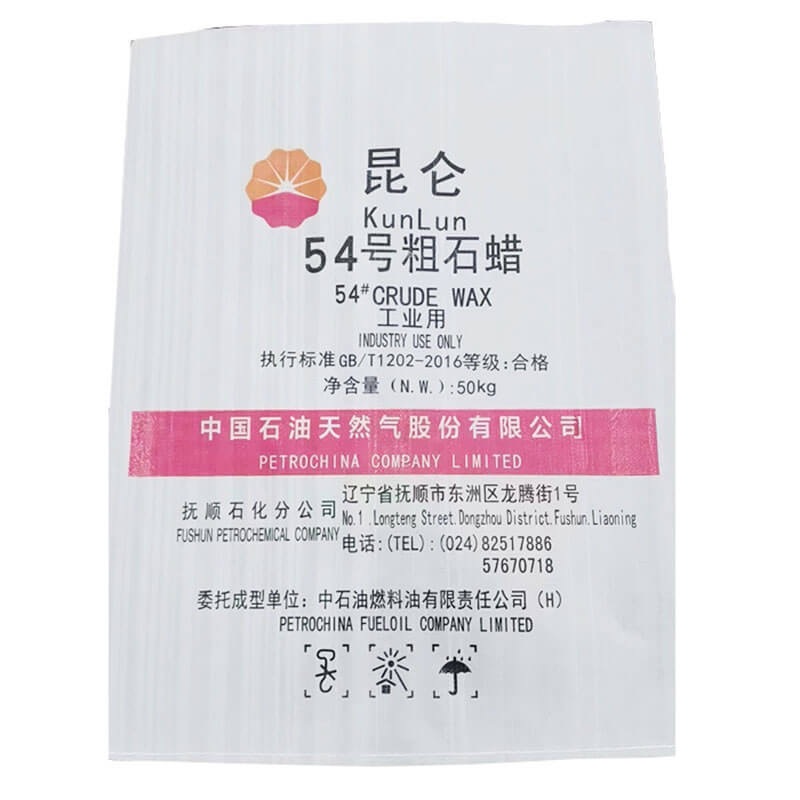
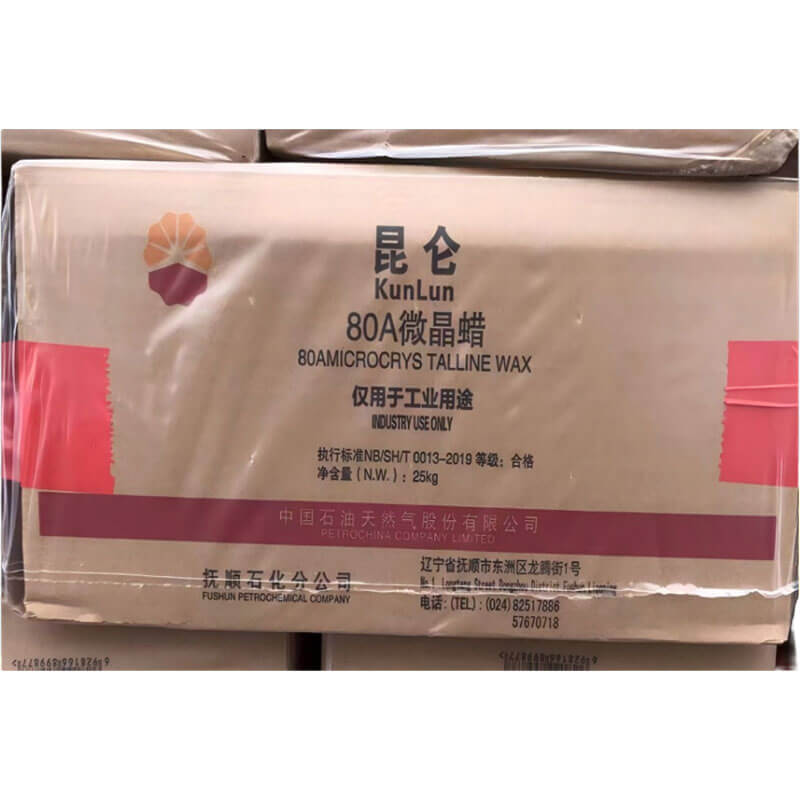
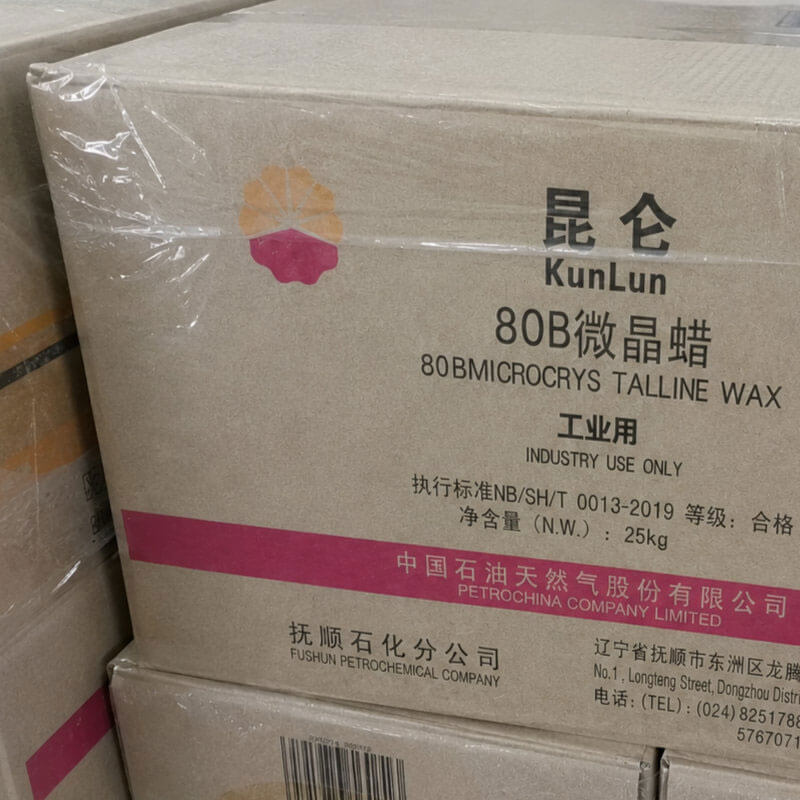
| Packing | Packaged in 25 kg net woven bags, palletized and stretch-wrapped for safe transport, storage, and handling. |
| Container Loading (20′ FCL) | 20′ FCL: 58# Semi-Refined Paraffin Wax packed in 25kg bags on pallets, shrink-wrapped for safe loading. |
| Shipping | 58# Semi-Refined Paraffin Wax ships as a solid in clean, dry bags, cartons, or pallets to prevent contamination and moisture ingress. Keep away from heat, open flames, and direct sunlight. Use covered, ventilated transport. No special hazard classification; ensure proper labeling and handling to avoid damage and melting. |
| Storage | Store 58# Semi-Refined Paraffin Wax in a cool, dry, well-ventilated area away from heat, open flames, and direct sunlight. Keep containers tightly sealed to prevent contamination and moisture absorption. Avoid strong oxidizers and incompatible materials. Maintain temperature below 40°C to prevent softening. Ensure good housekeeping to minimize slip hazards and fire risk. |
| Shelf Life | Shelf life is typically 2–3 years when stored in a cool, dry place, away from heat, sunlight, and moisture. |
In candle manufacturing, 58# semi-refined paraffin wax is specified as a crystalline phase control agent rather than as a simple bulk filler. The material is routinely characterized by congealing point under ASTM D938-12, melting point under ASTM D87-09(2014), oil content under ASTM D721-17, and needle penetration at 25 °C under ASTM D1321-16a. Typical semi-refined 58# lots show oil content of 1.0 wt% to 2.0 wt% and needle penetration of 12 dmm to 18 dmm. Batch-to-batch drift in oil content above 2.0 wt% reduces the sharpness of the solidification front and produces visible oil exudation on container candle surfaces after storage at 40 °C. In compounding, container candles use 60 wt% to 85 wt% 58# wax, 0 wt% to 10 wt% microcrystalline wax, 3 wt% to 8 wt% stearic acid, 0.5 wt% to 2.0 wt% ethylene-vinyl acetate or alpha-olefin polymer additive, 3 wt% to 7 wt% fragrance, and 0.01 wt% to 0.1 wt% dye. Pillar candles reduce 58# wax to 40 wt% to 65 wt% and increase microcrystalline wax to 5 wt% to 15 wt% to improve mold release and slump resistance. Production lines typically melt the wax in jacketed kettles at 70 °C to 80 °C; thermal input above 85 °C accelerates thermo-oxidative chain scission, shifts dye solubility, and raises the acid value. Low-shear anchor agitation at 200 rpm to 400 rpm is used during fragrance dosing at 65 °C to 75 °C. High-shear mixing is avoided because entrained air nucleates microvoids that appear as white spots after solidification. Automated pouring equipment delivers the compound into preheated aluminum molds or glass containers at 65 °C to 72 °C, with ambient cooling controlled between 18 °C and 24 °C to regulate crystal size distribution. Finished goods include container candles, pillar candles, votive candles, and tea-light cups; for retail distribution, candle safety performance is assessed under ASTM F2417-17 for flame height, secondary ignition, and end-of-life stability. Fragrance loads above 8.0 wt% in an unmodified 58# base cause oil exudation and wick blockage, requiring either reduced paraffin fraction or addition of a polymer crystal modifier.
| Component | Container candle (wt%) | Pillar candle (wt%) | Votive candle (wt%) |
|---|---|---|---|
| 58# semi-refined paraffin wax | 60–85 | 40–65 | 55–75 |
| Microcrystalline wax | 0–10 | 5–15 | 3–10 |
| Stearic acid | 3–8 | 3–8 | 3–8 |
| EVA/alpha-olefin additive | 0.5–2.0 | 0.5–2.0 | 0.5–2.0 |
| Fragrance | 3–7 | 1–4 | 2–5 |
| Dye | 0.01–0.1 | 0.01–0.05 | 0.01–0.05 |
Curtain-coating operations for dry food wrappers and bakery paperboard apply 58# semi-refined paraffin wax at coating weights of 4 g/m² to 15 g/m² for dry-environment barriers, while liquid-resistant cup and tray applications require 15 g/m² to 30 g/m². The wax reservoir is maintained at 85 °C to 95 °C to hold dynamic viscosity in the range of 3 mPa·s to 7 mPa·s at 100 °C. This viscosity window permits a stable curtain from slit dies with lip gaps between 0.4 mm and 0.8 mm. Paper and paperboard webs are preheated to 40 °C to 60 °C before the coating station; insufficient preheating causes premature solidification at the web surface and produces a nodular wax layer with poor adhesion. Chill rolls at 10 °C to 15 °C immediately downstream set the wax as a continuous semi-crystalline film. For non-food industrial packaging, moisture-barrier performance is evaluated under TAPPI T 454 at 37.8 °C and 90% RH; waxed kraft papers can fall below 5 g/m²/day, though actual water vapor transmission depends on basis weight, fiber refining, and coating uniformity. Food-contact use requires lot-specific conformance to 21 CFR 178.3710(b) for petroleum wax, and the finished paper and paperboard article must meet 21 CFR 176.170. Not every semi-refined 58# lot automatically meets the ultraviolet absorbance limits in 21 CFR 178.3710(b), because refining depth determines residual unsaturated species and polycyclic aromatic content. In full-scale curtain coaters, the dominant rejection mode is edge chattering when wax temperature drops below 82 °C and viscosity rises above 10 mPa·s, creating uneven coating edges and downstream converting waste. Finished product types are waxed paper sheets, bakery interleaving tissue, dry food wrappers, paper cup blanks, and wax-coated paperboard trays.
The limiting variable in wax-emulsified wood-panel operations is not the hydrophobicity of 58# semi-refined paraffin wax itself, but the colloidal stability of the aqueous emulsion before blowline injection. The wax is introduced as an aqueous emulsion at 0.3 wt% to 1.5 wt% solid wax based on dry wood fiber. Medium-density fibreboard lines generally operate at 0.5 wt% to 1.0 wt%, while particleboard lines use 0.3 wt% to 0.8 wt%. The emulsion is prepared in rotor-stator homogenizers at 65 °C to 75 °C, with median particle diameter controlled between 1 µm and 3 µm. System pH is maintained at 7.5 to 9.5 using a volatile alkali; acidic conditions destabilize the dispersed wax and release tacky solid particles that block blowline nozzles. Jacketed storage tanks are held at 60 °C to 70 °C with agitation below 300 rpm. Shear-induced coalescence above this speed shifts the particle size distribution beyond 10 µm and degrades the uniformity of hydrophobic treatment. The wax emulsion and urea-formaldehyde resin are injected downstream of the refiner into the blowline at 0.8 MPa to 1.2 MPa steam pressure. Wax droplets deposit on fiber surfaces before the fiber mat enters the continuous press. Press temperatures of 180 °C to 220 °C melt and redistribute the wax during resin cure, creating discontinuous hydrophobic domains within the panel core. Compliance is tested under EN 622-5 for dry-process MDF, EN 312 for particleboard, and EN 317 for thickness swell after 24 h immersion. A 24 h thickness swelling below 8% is a typical internal control for 8 mm MDF treated with 0.8 wt% wax emulsion, though published data for specific resin systems and wood species remain highly variable. Operational boundaries include fiber moisture above 4% entering the blowline, which reduces wax deposition efficiency, and emulsion storage beyond 24 h without pH adjustment, which increases surface wax spotting after pressing. Final product types are furniture-grade MDF boards, particleboard panels, and oriented strand board panels.
Mixing records from 157 L tangential Banbury lines indicate that 58# semi-refined paraffin wax is charged into rubber compounds at 0.5 phr to 2.0 phr as a migratory ozone-protective bloom film. Tyre sidewall formulations commonly use 1.0 phr to 2.0 phr, while hydraulic and industrial hose compounds use 0.5 phr to 1.0 phr. The wax is added with zinc oxide and stearic acid in the first pass at a drop temperature of 145 °C to 155 °C, with rotor speed between 30 rpm and 50 rpm. A single-pass mix is preferred because a remill pass at 120 °C to 130 °C reduces the final bloom rate by redistributing wax into the bulk polymer phase. After vulcanization at 150 °C to 170 °C, the wax migrates to the rubber surface and forms a continuous protective layer. Ozone resistance is evaluated under ISO 1431-1:2022 at 50 pphm ozone, 40 °C, and 20% elongation. Tensile and tear properties are measured under ASTM D412-16 and ASTM D624-00(2020), while Mooney viscosity is monitored under ASTM D1646-19a to detect processability drift caused by oil content variation in semi-refined wax. The residual oil content of 1.0 wt% to 2.0 wt% acts as an internal plasticizer, but additions above 2.5 phr can reduce tensile strength and interfere with uncured building tack in tire assembly. In compounds containing p-phenylenediamine antidegradants, bloom film formation may be retarded by co-migration competition at the rubber surface; therefore, wax dosage is maintained at the lower end of the range when high antidegradant loadings are already present. The visible production failure mode is uneven sidewall bloom after curing if the wax is not dispersed before the compound temperature drops below its melting point during the feed stage. Premixed wax/polymer masterbatches are used on high-speed extruders with L/D ratios above 20:1 to prevent localized wax lumps. Finished product types are pneumatic tyre sidewalls, conveyor belt covers, hydraulic hose covers, and rubber vibration isolators.
Hot-melt compounding of 58# semi-refined paraffin wax with ethylene-vinyl acetate and amorphous poly-alpha-olefin resins is performed at 150 °C to 170 °C in jacketed Sigma-blade mixers purged with nitrogen. The semi-refined product carries 1.0 wt% to 2.0 wt% oil, which accelerates oxidative color development above 180 °C. The wax functions as a viscosity diluent and open-time modifier at 15 wt% to 35 wt% of the formulation. Standard corrugated case-sealing adhesives operate at 20 wt% to 30 wt% wax, while lower-viscosity paper cup lamination grades may reach 35 wt%. Apparent viscosity is measured under ASTM D3236-15 at 180 °C using a Brookfield Thermosel apparatus. Production batches are released at 800 mPa·s to 1,500 mPa·s for corrugated case sealing and 400 mPa·s to 800 mPa·s for paper lamination. Wax additions above 35 wt% increase low-temperature brittleness, and fiber tear adhesion on 200 g/m² corrugated stock can fall below 80% at 0 °C. For food packaging adhesives, the formulation must conform to 21 CFR 175.105; the wax component is additionally verified against 21 CFR 178.3710 ultraviolet absorbance limits. Non-food industrial applications do not require that verification. In continuous production, a twin-screw extruder with an L/D ratio of 44:1 and underwater pelletization converts the compounded blend into pellets for adhesive coaters, with melt temperature maintained at 160 °C to 170 °C. Terminal product types are corrugated case and carton sealing adhesives, paper cup and tray bonding compounds, and flexible packaging lamination adhesives.
In waxed corrugated containers for agricultural and protein distribution, 58# semi-refined paraffin wax is applied at a pickup of 10 wt% to 30 wt% of board basis weight. Produce boxes commonly use 10 wt% to 18 wt%, while poultry and seafood boxes with wet ice contact require 20 wt% to 30 wt%. The board is passed through a cascading wax curtain or full immersion bath at 85 °C to 100 °C, with wax viscosity controlled between 5 mm²/s and 15 mm²/s at 100 °C. This viscosity range permits penetration into the corrugated flutes without saturating the linerboard surface into a brittle film. Substrate moisture must be 6% to 8% entering the wax station; above 10% moisture, escaping water vapor blocks the pore network and limits wax penetration below 5 wt%, leaving the flutes susceptible to collapse under wet stacking loads. After immersion, the board is drained and cooled under forced air at 15 °C to 25 °C. The wax solidifies within the board structure and increases wet stacking strength. Edgewise compressive strength of waxed corrugated board is tested under TAPPI T 811 with wet-boarded samples conditioned by water spray or high-humidity exposure. A wet edgewise compressive strength retention target is commonly above 50% of the dry value, although published data for specific linerboard combinations and flute types is limited. Compliance for food-transit packaging follows the destination market regulations, and wax used in direct meat or poultry contact is typically verified for 21 CFR 178.3710 compliance when exported to the United States. Finished product types are waxed corrugated produce boxes, poultry boxes, seafood boxes, and meat boxes.
Competitive 58# Semi‑Refined Paraffin Wax prices that fit your budget—flexible terms and customized quotes for every order.
For samples, pricing, or more information, please contact us at +8618136850665 or mail to sales4@ascent-chem.com.
We will respond to you as soon as possible.
Tel: +8618136850665
Email: sales4@ascent-chem.com
Flexible payment, competitive price, premium service - Inquire now!
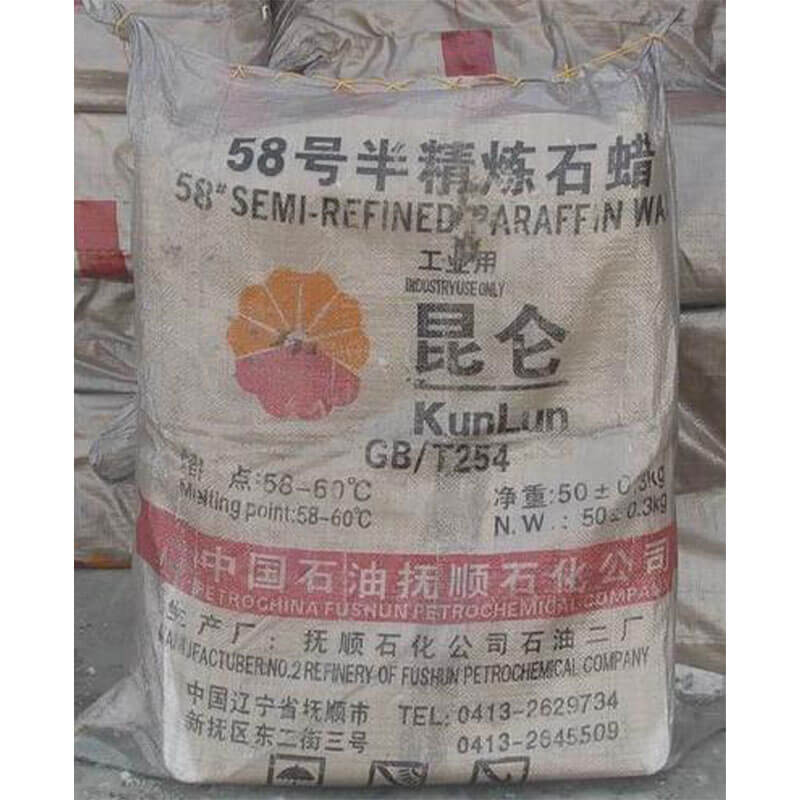
58# Semi-Refined Paraffin Wax is a petroleum-derived macro-crystalline wax obtained from vacuum distillate fractions by solvent dewaxing and clay finishing, without the deeper hydrotreating sequence applied to fully refined paraffin wax. The model designation follows the Chinese semi-refined paraffin wax grade system under GB/T 254-2010, in which the numeric prefix refers to the nominal melting point grade. Under a representative certificate of analysis, acceptance is controlled by a melting point of 58.0–60.0 °C when tested by GB/T 2539-2008, oil content not exceeding 1.8 wt% by GB/T 3554-2014, needle penetration of 14–19 × 0.1 mm at 25 °C by GB/T 4985-2010, and Saybolt colour not less than +18 under ASTM D156-17. This grade is therefore positioned between slack wax and fully refined 58# paraffin wax in oil retention, hardness, colour stability, and application scope.
The numeric suffix is not an exact melting point but a nominal grade marker. Semi-refined paraffin wax grades in the GB/T 254-2010 system are separated by 2 °C intervals, so 58# is bracketed by 56# and 60#. The actual cooling-curve melting point must remain within the 58.0–60.0 °C acceptance band. High-volume candle and panel producers commonly tighten the certificate interval to 58.5–59.5 °C because the lower limit controls storage slump at warehouse temperatures above 35 °C, while the upper limit controls melt-plate temperature and pump load. A lot that drifts to 60.5 °C may require an additional 5–8 °C in jacketed transfer lines to maintain equivalent viscosity, which increases energy input and volatile odour release.
| Property | Test method | Typical acceptance range |
|---|---|---|
| Grade designation | GB/T 254-2010 | 58# |
| Melting point | GB/T 2539-2008 | 58.0–60.0 °C |
| Oil content | GB/T 3554-2014 | ≤ 1.8 wt% |
| Needle penetration | GB/T 4985-2010 | 14–19 × 0.1 mm at 25 °C |
| Saybolt colour | ASTM D156-17 | ≥ +18 |
| Kinematic viscosity | ASTM D445-21 | 4.8–6.0 mm²/s at 100 °C |
Compositionally, 58# semi-refined paraffin wax is dominated by n-alkanes from approximately C20 to C36, with lower concentrations of iso-alkanes and cycloalkanes. The retained oil fraction, normally 1.0–1.8 wt%, is concentrated in branched and low-molecular-weight species that reduce solid-state crystallinity. This is reflected in the penetration limit: semi-refined 58# is harder than slack wax but softer than many fully refined grades of the same melting point. The kinematic viscosity at 100 °C is generally 4.8–6.0 mm²/s by ASTM D445-21, low enough for unassisted flow through heated bag filters and gear pumps but high enough to maintain a coherent film in roll-coat application. Compared with Fischer-Tropsch waxes, which can have very low oil content and a narrow carbon distribution, the petroleum-derived semi-refined 58# exhibits broader hydrocarbon distribution and more variable crystalline morphology; published direct comparison data for this specific grade is limited.
The main distinction between semi-refined and fully refined paraffin wax is not the 58# melting point but the depth of oil and colour removal. Fully refined 58# grades typically hold oil content below 0.5 wt% and must pass more stringent colour, odour, and ultraviolet absorbance criteria; semi-refined 58# retains 1.0–1.8 wt% oil and is not normally supplied against FDA 21 CFR 178.3710 for food-contact coatings without additional purification and batch-specific compliance testing. Relative to microcrystalline wax, which is derived from heavier residual streams and contains higher concentrations of branched and cyclic hydrocarbons, 58# semi-refined paraffin wax forms larger, harder, and more brittle crystals. Its penetration of 14–19 × 0.1 mm compares with microcrystalline grades that frequently exceed 25 × 0.1 mm; the lower toughness of semi-refined wax therefore provides better release in rigid moulding but lower flex-crack resistance in flexible coatings. In hot-melt adhesives, the product acts as a viscosity reducer and open-time controller, whereas microcrystalline wax is added at 10–30 wt% to improve cohesion and low-temperature flexibility.
| Product class | Oil content | Needle penetration at 25 °C | Melting point | Practical consequence |
|---|---|---|---|---|
| 58# semi-refined paraffin wax | 1.0–1.8 wt% | 14–19 × 0.1 mm | 58.0–60.0 °C | residual oil improves mould release but may increase blocking above 35 °C |
| Fully refined 58# paraffin wax | ≤ 0.5 wt% | 12–17 × 0.1 mm | 58.0–60.0 °C | cleaner colour and odour; possible food-contact use after compliance testing |
| Microcrystalline wax | 1.0–3.0 wt% | >25 × 0.1 mm | 60–90 °C | flexible film, high oil-binding capacity; used as plasticizer in wax blends |
On automated candle lines, 58# semi-refined paraffin wax is processed as the main wax phase at 80–90 wt% of the blend, with stearic acid, hydrogenated vegetable wax, or low-molecular-weight polyethylene added to modify shrinkage and release. The wax is melted in jacketed kettles at 85–95 °C, then fed to multicavity rotary moulding or screw-fed extrusion systems at 70–75 °C. If the melting point of a batch approaches 61 °C, the higher solidification onset can raise die pressure and create surface drag marks in screw-fed machines; if it falls toward 57 °C, candle surface tack can increase in tropical shipment. Cooling is normally done with forced air at 12–18 °C, and the residual oil content at the top of the specification range can reduce ejection force but may increase blocking if pallets are stored above 35 °C. Plant-scale control therefore uses cooling-curve data and differential scanning calorimetry in combination with the 58.0–60.0 °C standard window rather than relying on nominal grade alone.
The product is used as an external lubricant in rigid PVC extrusion and injection moulding, where its hydrocarbon film reduces shear heating and metal adhesion. In high-shear counter-rotating twin-screw extruders with L/D ratios of 24–28, addition levels of 0.3–0.8 phr are common; lower levels may fail to control fusion, while higher levels can cause plate-out on downstream calibrators. The semi-refined oil fraction will migrate to the surface more readily than a fully refined paraffin wax, so the slip effect appears earlier but the risk of printed-surface adhesion and lacquer wetting failure also increases. When this substitution is made, the processing window for barrel zone temperatures is often lowered by 5–8 °C to avoid excessive volatilization of the retained oil fraction. No universal replacement ratio is available; the specific formulation must be validated with an instrumented torque rheometer according to ASTM D2538-18 to compare fusion time and equilibrium torque.
In corrugated board and paper coating, 58# semi-refined paraffin wax is applied as a moisture-barrier and slip aid at coating weights of 3–10 g/m², often by curtain coating or roll coating. Moisture resistance is commonly measured by the Cobb method under ISO 535:2014. The semi-refined grade reduces blocking of high-gloss coatings and improves scuff resistance, but the retained oil can interact with flexographic inks unless a barrier primer is used. For applications requiring direct food contact or low odour, fully refined paraffin wax or a formulated compliant coating is specified instead. The product is also used in wood particleboard and medium-density fibreboard as a hydrophobic additive at 0.5–1.5 wt% on oven-dry furnish, where its melting range is compatible with press temperatures of 150–180 °C.
In rubber compounds, petroleum wax bloom creates a physical barrier against ozone attack. 58# semi-refined paraffin wax is selected when the service-temperature range favours n-alkanes with carbon lengths near C24–C32 because these migrate to the rubber surface at typical vulcanization and service temperatures. The wax is added in the internal mixer at 1.0–3.0 phr, typically after the elastomer has fluxed but before curatives, to avoid coating filler particles. Migration rate depends on the solubility of the n-alkane fraction in the rubber matrix and on storage temperature; below 10 °C bloom is slow and ozone protection may be delayed, while above 40 °C the film can become soft and less coherent. Compared with microcrystalline wax blends, a straight 58# semi-refined paraffin wax gives a harder but more brittle surface film, so it is often blended with microcrystalline wax at 20–40 wt% to balance bloom rate and film flexibility. Ozone test performance should be confirmed by ISO 1431-1:2022 under the intended elongation and temperature.
In polyolefin masterbatch production, 58# semi-refined paraffin wax functions as a wetting agent and viscosity depressant in pigment concentrates at 5–15 wt%. The product is compounded in a co-rotating twin-screw extruder; because the oil fraction can reduce pigment wetting but also cause screw slip if introduced too early, it is usually fed downstream with a side feeder rather than in the main feed throat. For masterbatches destined for food-contact packaging, the use of semi-refined wax requires migration testing under EU Regulation 10/2011 or FDA 21 CFR 177.1520; unless the wax is specifically listed and batch-certified for such use, switching to a fully refined or polymer-grade wax is required.
Storage and handling constraints follow from the solvent-dewaxed semi-refined matrix. The product should be kept in closed, vented vessels at or below 40 °C to prevent blocking and water ingress. Prolonged heating above 120 °C darkens colour and increases odour because the retained oil fraction oxidizes more readily than fully refined wax. Processing above 200 °C in air should be avoided; thermal decomposition can release low-molecular-weight paraffin fumes. The material is not normally classified as dangerous under REACH or CLP in the supplied form, but suppliers’ safety data sheets should be checked for residual solvent levels below 0.1 wt% and for any country-specific inventory status.
Compared with stearic acid and hydrogenated vegetable waxes, 58# semi-refined paraffin wax has lower polarity and a more defined crystalline melting range. Unlike low-density polyethylene waxes, it is not polymeric and does not contribute comparable melt strength or shear-thinning behaviour. Unlike Fischer-Tropsch waxes, it has a broader n-alkane distribution and a lower melting plateau. These differences make the 58# grade suitable for cost-sensitive industrial coatings, candle wax blends, particleboard sizing, rubber protection, and lubricant packages where exact hydrocarbon purity is not the limiting variable.