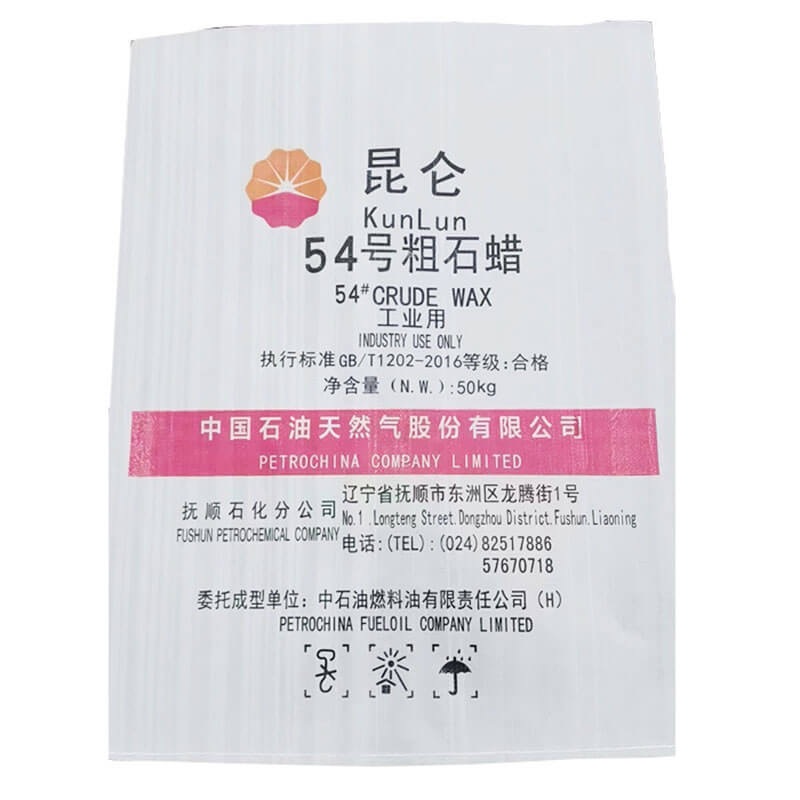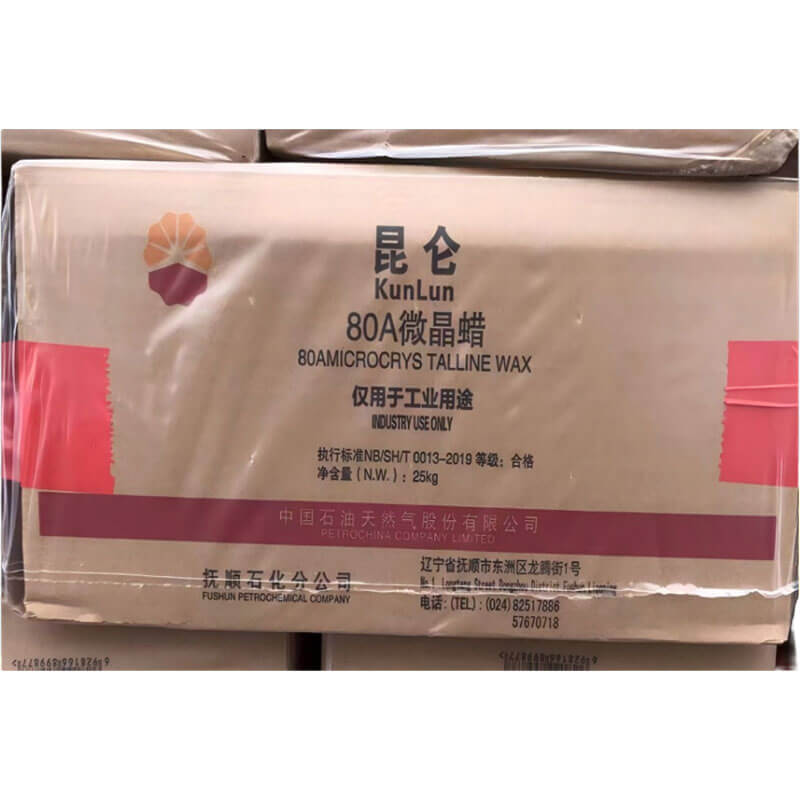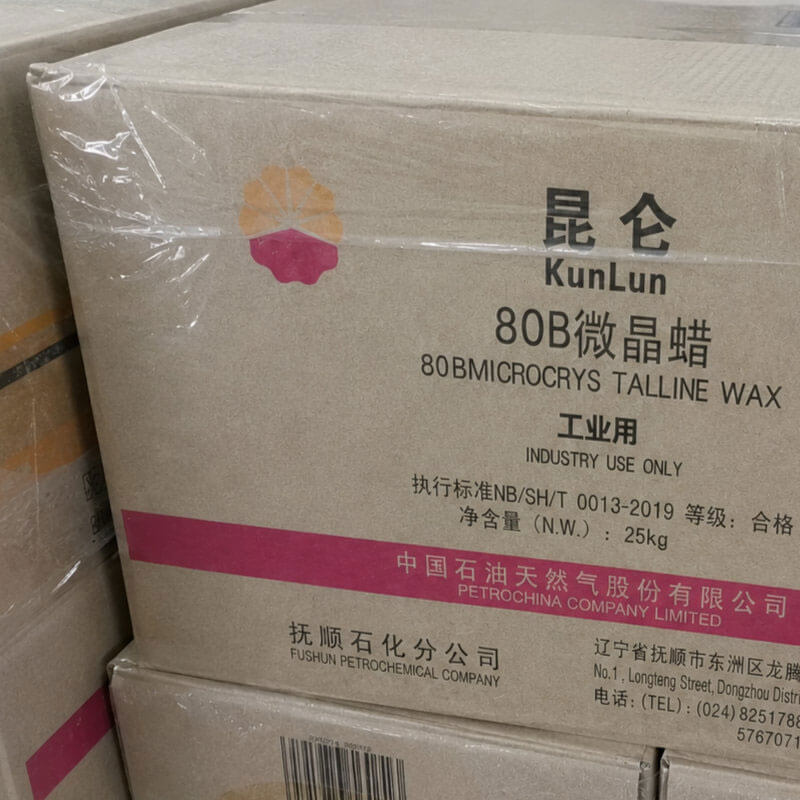
| HS Code | 836851 |
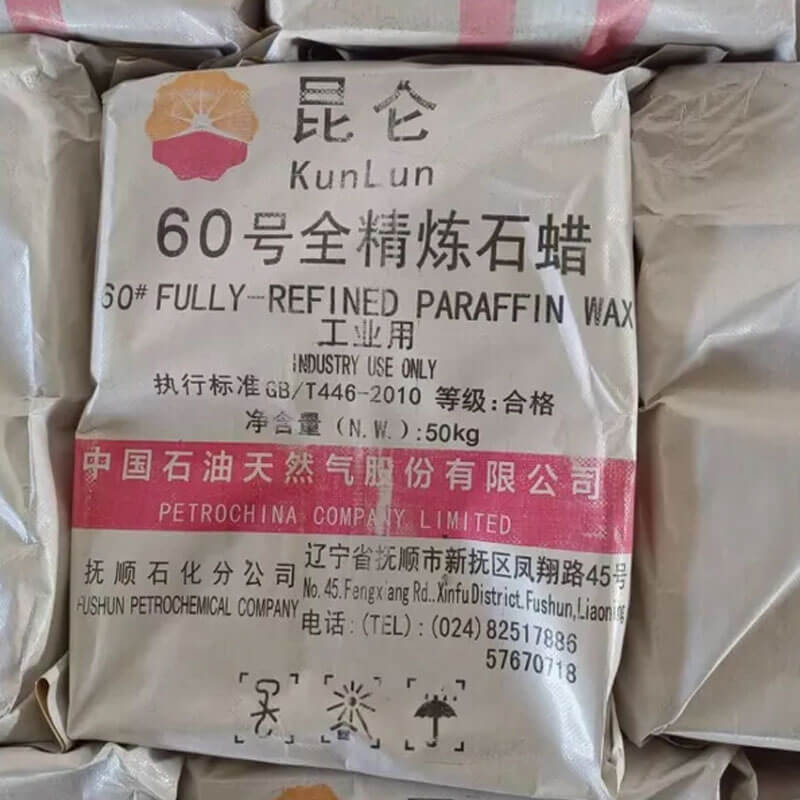
| Product Name | 60# Fully-Refined Paraffin Wax |
| Appearance | White translucent solid |
| Melting Point C | 60-62 |
| Oil Content Percent | <=0.5 |
| Penetration At 25c 1 Over 10 Mm | <=25 |
| Saybolt Color | >=+25 |
| Odor | Odorless |
| Kinematic Viscosity At 100c Mm2 S | 2.5-4.5 |
| Density At 25c G Cm3 | 0.88-0.92 |
| Flash Point C | >=220 |
| Light Stability | Pass |
| Thermal Stability | Pass |
| Mechanical Impurities | None |
| Water Soluble Acids And Alkalies | None |
As an accredited 60# Fully‑Refined Paraffin Wax factory, we enforce strict quality protocols—every batch undergoes rigorous testing to ensure consistent efficacy and safety standards.
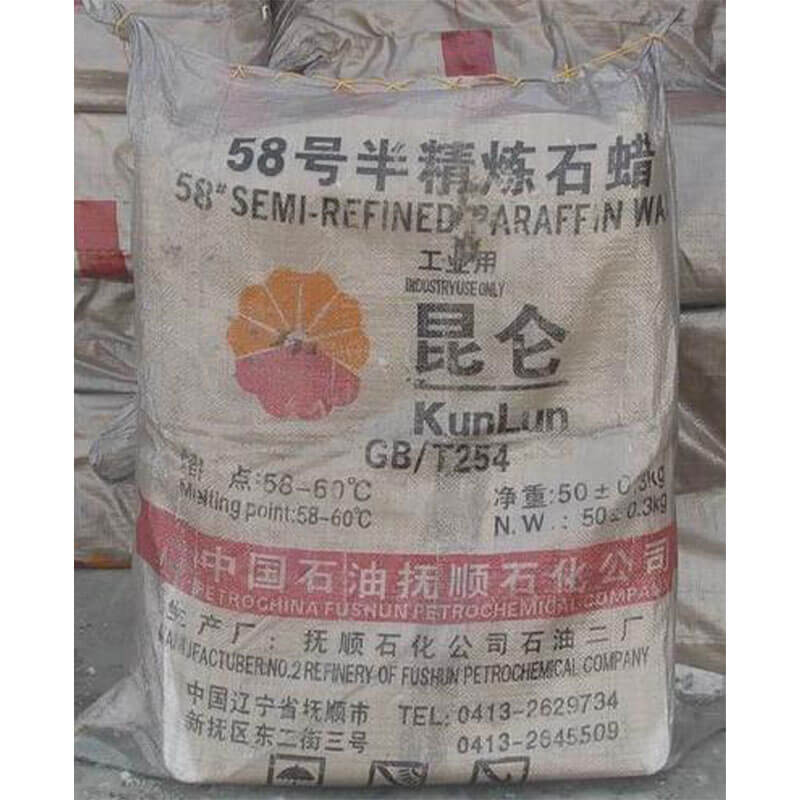
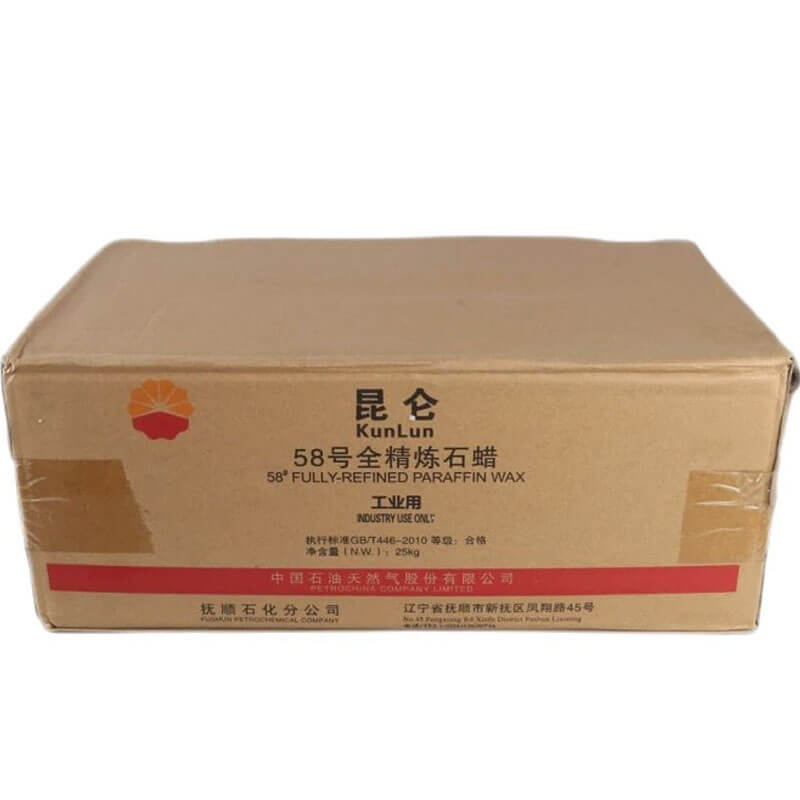
| Packing | 25 kg net per bag, fully-refined paraffin wax packed in moisture-proof lined multi-wall paper bags, palletized and wrapped. |
| Container Loading (20′ FCL) | 20′ FCL container loaded with 60# fully-refined paraffin wax, securely palletized and packed for safe, efficient transport. |
| Shipping | 60# fully-refined paraffin wax is a non-hazardous solid shipped in woven bags, cartons, or meltable bulk containers on pallets. Use clean, dry, ventilated containers; avoid heat, open flames, and direct sunlight. Secure loads to prevent shifting. No dangerous-goods restrictions apply under standard transport regulations. |
| Storage | Store 60# Fully-Refined Paraffin Wax in a cool, dry, well-ventilated area away from direct sunlight, heat sources, and open flames. Keep containers tightly sealed to prevent dust contamination and moisture absorption. Maintain temperature below 40°C to avoid softening or melting. Separate from strong oxidizers and incompatible materials. Ensure good housekeeping to minimize slip hazards. |
| Shelf Life | Shelf life is indefinite when stored in a cool, dry area away from heat and oxidizers; keep containers sealed. |
Molten 60# fully-refined paraffin wax with a congealing point of 58–62 °C and a maximum oil content of 0.5 wt% is specified for direct food-contact paper and paperboard where low odour, low residual sulphur, and rapid set-up on high-speed converting lines are critical. Regulatory conformity for this segment is anchored to FDA 21 CFR 176.170 for paper and paperboard components contacting aqueous and fatty foods, EU Regulation 1935/2004 for packaging materials, and BfR Recommendation XXXVI/1 for paper intended for food contact, with extractable aromatic hydrocarbon controls by validated UV absorbance methods. In hot-melt curtain coating and cascade saturating, the wax is used as the continuous phase at 100 wt% or blended with 2–10 wt% microcrystalline wax to increase film flexibility and with 0.5–1.5 wt% ethylene-vinyl acetate copolymer for heat-seal tack. Dry coating weights on bleached kraft are set between 3 g/m² and 8 g/m², while corrugated saturation for wet-strength produce boxes controls wax pick-up at 25–40 wt% of board mass. Production equipment includes heated dip tanks, squeeze rolls, and curtain coater heads running at 80–100 °C, followed by water-cooled chill rolls or forced-air cooling; melt viscosity at application temperature must remain below 20 mPa·s to prevent curtain break-up. Finished article types include bakery tissue interleavers, butcher wrap, poultry overwrap, and wax-saturated corrugated produce boxes for cold-chain distribution.
In pillar and votive candle production, 60# fully-refined paraffin wax functions as the crystalline base wax, but its narrow melting plateau can generate sinkholes and poor liquid fragrance retention when used alone. Candle flammability and burn-quality evaluations follow ASTM F2417 for fire safety, ASTM D87 for melting point, ASTM D938 for congealing point, and ASTM D92 closed-cup flash point determination for fragrance-containing finished wax mixtures. Formulation addition ratios are controlled as follows: 68–85 wt% 60# fully-refined paraffin wax as base resin, 12–20 wt% stearic acid for mould release and opacity, 5–10 wt% microcrystalline wax for fragrance-oil binding and surface flexibility, 0.5–2 wt% Vybar 103 or equivalent α-olefin polymer for optic brightening and hardness modification, 4–8 wt% fragrance compound, and 0.05–1.0 wt% pigment dispersion. Production proceeds by melt blending at 80–90 °C, with fragrance addition only below 75 °C to avoid flash-off and carbonyl degradation. Cooling tunnels are operated at 20–25 °C with forced-air circulation to shorten through-curing time; a second pour at 68–72 °C compensates for internal shrinkage cavities. Operational limits require that melt holding temperatures not exceed 110 °C, because peroxide formation and visible yellowing accelerate above this threshold in low-oil paraffin systems. Finished product types comprise cylindrical pillar candles, taper candles, votive inserts, and filled container candles with cotton or wood wicks.
Spiral-spray carton and case sealing with EVA-based hot-melt adhesives benefits from the narrow melting petroleum wax fraction because 60# fully-refined paraffin reduces melt viscosity without leaving a low-molecular-weight oil film on compressed fluting. Indirect food packaging adhesive compliance is established under FDA 21 CFR 175.105 and 21 CFR 176.180, with melt rheology tested by ASTM D3236 Brookfield thermosel viscosity and softening point by ASTM E28; EU REACH registration for petroleum waxes applies to the substance itself. In standard EVA hot-melt packaging formulations, 60# fully-refined paraffin is compounded at 10–25 wt% against 25–35 wt% EVA containing 28 % vinyl acetate, 35–50 wt% hydrogenated hydrocarbon tackifier, and 0.3–0.8 wt% hindered phenolic antioxidant. Manufacturing uses vertical jacketed sigma-blade mixers at 120–150 °C under nitrogen, with melt filtration through 200–400 µm mesh before discharge into coated pans or drums. The formulated adhesive is applied at 140–160 °C through slot die or spiral spray heads with nozzle air pressure of 0.15–0.35 MPa. Process limits include avoiding pot temperatures above 170 °C for more than 4 h, as alkane chain scission increases colour-body formation and reduces heat-seal initial tack on high-speed case erectors. Finished product types comprise deep-freeze corrugated case sealing, tray erection, bookbinding, and slot-die coated label stock.
In styrene-butadiene and butadiene rubber sidewall compounds, low-oil paraffin wax blooms to the cured rubber surface to form a hydrocarbon film that limits ozone contact with unsaturated backbone sites and reduces visible cracking. Ozone attack resistance is evaluated under ISO 1431-1:2004 static ozone cracking and ASTM D1149, while wax purity is controlled through ASTM D721 oil-content testing and REACH substance registration for petroleum waxes. The addition level for radial tyre sidewall and bead filler compounds is 1.0–2.0 phr, with 0.5–1.0 phr specified for EPDM extrusions and reinforced conveyor belts; doses above 2.5 phr cause measurable building-tack loss and can reduce green-ply adhesion before curing. Compounding is performed in an internal mixer or two-roll mill, with the wax added at the mastication stage together with zinc oxide and stearic acid. Drop temperatures are maintained at 145–165 °C, and excursions above 170 °C are avoided because low-molecular-weight wax fractions can volatilise or decompose. After extrusion and cure at 150–165 °C, the bloom film develops over 24–72 h at 20–25 °C; insufficient film continuity is a known batch-to-batch failure mode when wax distribution is uneven. Finished product types include radial tyre sidewalls, bead chafers, cured rubber profiles, and industrial conveyor belt covers.
Fully-refined 60# paraffin is selected for safety match splint impregnation because its narrow melting point range provides a controlled fuel film that promotes head-to-splint ignition transfer. Compliance is assessed against the EU General Product Safety Directive 2001/95/EC, EN 1783:1997 safety requirements for match construction, and ASTM D87 melting point determination for incoming wax lots. In match head formulations, the wax is dosed at 5–10 wt% of dry oxidiser mass as a fuel/binder component; for splint impregnation, wax uptake is controlled at 8–12 wt% of dry splint mass. Published equipment-specific loading data for 60# fully-refined paraffin in match splint saturation remain limited, so industrial control is based on direct wax-uptake measurement rather than exact bath formulation. Kiln-dried aspen or poplar splints are preheated and dipped in molten wax at 115–130 °C, drained, and passed over cooling rolls at 15–20 °C to solidify a uniform shell before the match head slurry is applied by dipping conveyor. Excess moisture in splints above 8 % causes steam blistering and poor shell uniformity. Finished product types include consumer safety matches, barbecue deep-burn matches, and candle-lighting splints.
In warm depilatory strip wax, 60# fully-refined paraffin wax functions as the primary crystalline scaffold that produces clean film elongation and low tack on skin after application. Cosmetic regulatory conformity is established under EU Regulation (EC) No 1223/2009 for cosmetic product safety, with optional USP/NF Paraffin Wax monograph compliance for pharmaceutical-grade material and 21 CFR 347.10 pertinence if the finished product is positioned as a skin protectant. Purity is controlled by ASTM D721 oil content and ASTM D87 melting point determinations. Formulation addition ratios are set at 55–75 wt% 60# fully-refined paraffin wax, 15–30 wt% glycerol rosin ester or hydrogenated styrene/methyl styrene/indene copolymer, 5–10 wt% white mineral oil, and 0–5 wt% microcrystalline wax for low-temperature flexibility. Production uses low-shear propeller mixing at 95–110 °C under nitrogen, with melt filtration at 80–90 °C and casting into cartridges or bead form. Strip wax film is applied at 0.5–1.0 mm thickness and removed against hair growth; without ethylene-vinyl acetate or polyisobutylene modification, the paraffin scaffold can become brittle below 15 °C, making cold-storage handling unsuitable. Finished product types include warm strip wax cartridges, wax beads, salon hair removal films, and pre-filled disposable strip wax systems.
Competitive 60# Fully‑Refined Paraffin Wax prices that fit your budget—flexible terms and customized quotes for every order.
For samples, pricing, or more information, please contact us at +8618136850665 or mail to sales4@ascent-chem.com.
We will respond to you as soon as possible.
Tel: +8618136850665
Email: sales4@ascent-chem.com
Flexible payment, competitive price, premium service - Inquire now!
Commercial lots of 60# fully refined paraffin wax are produced by solvent dewaxing, hydrofinishing, and fractionation of paraffinic vacuum distillates. The model designation 60# refers to the nominal melting-point class, not to a specific molecular weight or chain-length specification. The grade is supplied as translucent white pastilles, prills, or slabs with a nominal melting point plateau of 60–62 °C when tested by ASTM D87. Certificate-of-analysis parameters for the fully refined product include oil content not greater than 0.5 wt% by ASTM D721, Saybolt color of at least +28 by ASTM D156, needle penetration at 25 °C of 12–20 dmm by ASTM D1321, and kinematic viscosity at 100 °C of 6.5–8.5 mm²/s by ASTM D445. The substance is identified by CAS 8002-74-2 and EINECS 232-315-6. Because residual oil is controlled below 0.5 wt%, the product has lower surface tack and a narrower solidification exotherm than semi-refined grades; these properties are measurable in differential scanning calorimetry as a sharp crystallization peak rather than a broad shoulder.
| Parameter | Test method | Typical specification | Operational note |
|---|---|---|---|
| Melting point | ASTM D87 | 60–62 °C | Supplier-specific export lots may allow 58–60 °C |
| Oil content | ASTM D721 | ≤0.5 wt% | Fully refined criterion; food-contact lots may be lower |
| Saybolt color | ASTM D156 | ≥+28 | Hydrofinishing severity controls UV stability |
| Needle penetration | ASTM D1321, 25 °C | 12–20 dmm | Higher penetration indicates softer crystalline network |
| Kinematic viscosity | ASTM D445, 100 °C | 6.5–8.5 mm²/s | Used for melt pump sizing |
| Flash point | ASTM D92 | ≥200 °C | Long-residence tanks should use inert gas headspace |
For incoming inspection, melting point and oil content are the most useful lot-release criteria because they track refining severity and crystallization behavior. Needle penetration and Saybolt color are secondary but necessary when the wax is intended for white candle stock or packaging board where yellowing under storage is unacceptable. A lot with oil content less than 0.3 wt% typically exhibits lower blocking tendency in warm warehouses; however, the product standard remains ≤0.5 wt%, and formulators should not assume all lots will behave identically unless the supplier has supplied narrow-range data.
The principal distinction is residual oil content, not average chain length. Fully refined 60# contains ≤0.5 wt% oil by ASTM D721, whereas semi-refined 60# typically contains 1.5–2.0 wt% oil and slack wax contains 5–15 wt%. That residual oil is concentrated between lamellar crystal domains; it lowers the melting point, broadens the differential scanning calorimetry melt endotherm, and increases surface tack. The difference is especially important in paperboard coating, where oil migration can occur within 24–48 h at ambient temperature if the wax has not been fully refined.
Relative to microcrystalline wax, fully refined 60# has a narrow n-alkane distribution and a higher proportion of straight-chain paraffins. This produces lower elongation at break, lower adhesive tack, and a higher tendency to shrink in solidified parts. In hot-melt adhesive compounding, microcrystalline wax is often blended with 60# paraffin at 10–20 wt% of the wax phase to confer flexibility and reduce fracture. The 60# product itself is not a direct replacement for microcrystalline wax where cohesive strength under stress is required.
| Material | Oil content | Melting range | Color | Process consequence |
|---|---|---|---|---|
| Fully refined 60# | ≤0.5 wt% | 60–62 °C | +28 min | Narrow crystallization, low surface tack, lower oil migration |
| Semi-refined 60# | 1.5–2.0 wt% | 58–62 °C | +15 min | Broader solidification, more odor and slab blocking |
| Slack wax | 5–15 wt% | 50–60 °C | amber/brown | High oil mobility, used for soft industrial binders and coatings |
| Microcrystalline wax | ≤1.0 wt% | 60–90 °C | +25 min | Higher flexibility and tack; broader melt endotherm |
In candle moulding and continuous sizer lines, 60# fully refined paraffin wax is melted at 70–80 °C and transferred through steam-traced pipework to casting stations. Water-jacketed moulds operate at 18–25 °C, and the higher melting point of 60# relative to 54# or 58# shortens the time to skin formation but increases linear shrinkage. The result is a trade-off: faster demoulding is possible, but mould release must be improved with a release lubricant; otherwise, cylindrical candles develop surface pull marks or bottom cracking. Published data for specific machine configurations is limited, so cooling tunnel residence time is normally revalidated on the production line when the wax grade is changed.
In hot-melt adhesive extrusion, 60# paraffin wax functions as a low-viscosity diluent phase that raises the set speed of ethylene-vinyl acetate and polyolefin formulations. Compounding on a corotating twin-screw extruder with an L/D of 40:1 requires barrel temperatures above the wax melting point; process stability depends on maintaining the wax content within the formulation’s miscibility range. When the wax phase exceeds 15 wt% of the total formulation, bond peel strength on corona-treated polyethylene can decrease, and open time on high-speed case-sealing lines can become too short for reliable compression. These effects are formulation-specific and should be evaluated with production-length bond tests rather than extrapolated from melt viscosity alone.
For rigid PVC external lubrication, 60# paraffin is used with metallic stearates. The wax lowers melt viscosity and helps release the compound from metal die surfaces. At addition levels above 0.8 phr, torque-rheometry data may show delayed fusion and potential plate-out; the practical boundary varies with the stabilizer package and filler loading. Compounding trials are required because the wax is incompatible with strongly polar plasticizers at high dosage and can separate in static mixers if melt temperature drops below the melt plateau.
When 60# fully refined paraffin wax is used as a direct food-contact material, it must comply with 21 CFR 178.3710 petroleum wax specifications and the ultraviolet absorbance limits stated in that section. Not every fully refined wax automatically meets food-contact criteria; the supplier must provide a certificate of analysis or statement of compliance confirming the lot-specific ultraviolet absorbance, oil content, and color values. In the European Union, compliance is commonly addressed through migration limits under Regulation EC 1935/2004 and, where relevant, national provisions; the wax is also subject to REACH registration but is not typically classified as a hazardous mixture under CLP if hydrofinishing is complete.
The absence of water-soluble acids and alkalis is verified by ASTM D1833 or equivalent compendial methods. For packaging applications, migration testing should be performed on the finished laminate rather than the raw wax because the wax’s contact layer thickness and fiber penetration influence the transferred amount. The analytical certification package for direct food contact is not identical to the standard industrial certificate of analysis; it includes ultraviolet absorbance measurements on a solvent extract and color after acid wash where required by the receiving country.
In bulk handling, pastilles and prills should be stored in closed, ventilated warehouses at ambient temperatures below 35 °C. Excessive heat causes partial melting and blocking of bags or supersacks; prolonged exposure to ultraviolet radiation promotes photo-oxidation and an increase in odor. Molten wax storage tanks are jacketed and maintained at 70–80 °C, with a nitrogen headspace when residence time exceeds 24 h. Incompatibility with strong oxidizers, chlorinated solvents, and open flame is documented; wax fires require dry chemical extinguishing agents rather than water.
Substitution of 60# fully refined wax for 58# or 56# grades changes solidification behavior and can produce surface defects if the coating head temperature is not adjusted. Because the melting plateau is higher, the wax may begin to solidify in the transfer line if the line is only maintained at the previous grade’s set point. The corrective action is to increase melt temperature by 5–10 °C and to verify the viscosity at the applicator. In film lamination, the higher melt point increases hot tack and can reduce blocking of finished reels, but it may also reduce penetration into porous substrates, which must be compensated by nip pressure or preheating of the substrate.
In candle systems, replacing 58# with 60# full-refined wax raises melt pool temperature and can improve dimensional stability in warm transit. However, the higher solidification temperature narrows the window for adding fragrance oils; formulations above 6 wt% fragrance loading may exhibit bleed if the wax and fragrance are not fully miscible. Pilot batches should be checked for surface bloom after 72 h at 25 °C and after a 40 °C storage cycle. Because 60# fully refined wax has lower oil content, it is generally less prone to exudation than semi-refined grades, but it is also harder and stiffer. In cosmetics and pharmaceutical formulations, it may be used in petrolatum blends, but it is not a direct substitute for white mineral oil or microcrystalline wax; formulation testing under USP monographs is required if a drug or cosmetic claim is involved.