| HS Code | 992489 |
| Density | 0.915–0.925 g/cm³ |
| Melting Point | 122–128 °C |
| Tensile Yield Strength | 15–25 MPa |
| Elongation At Break | 300–900% |
| Flexural Modulus | 300–600 MPa |
| Vicat Softening Temperature | 95–110 °C |
| Brittle Temperature | -80 to -100 °C |
| Water Absorption | <0.01% |
| Chemical Resistance | Excellent resistance to acids, bases, and alcohols |
| Uv Resistance | Moderate; susceptible to degradation without stabilizers |
| Tear Strength | High (typ. 100–200 kN/m) |
| Puncture Resistance | Good to excellent |
As an accredited Linear Low‑Density Polyethylene LLDPE factory, we enforce strict quality protocols—every batch undergoes rigorous testing to ensure consistent efficacy and safety standards.
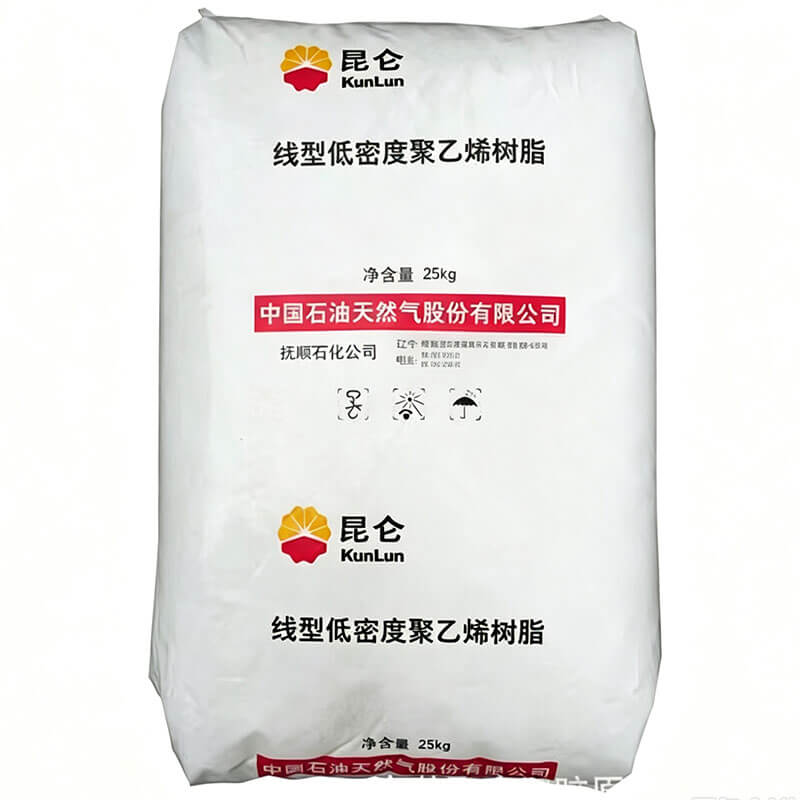
| Packing | Linear Low-Density Polyethylene (LLDPE) is supplied as pellets in 25 kg woven polypropylene bags, palletized and stretch-wrapped for safe transport. |
| Container Loading (20′ FCL) | 20′ FCL loaded with 25kg LLDPE bags on pallets, securely stowed, approx 20–22 metric tons per container. |
| Shipping | Linear Low-Density Polyethylene (LLDPE) ships as non-hazardous resin pellets in multi-wall paper bags, bulk hopper trucks, railcars, or octabins. Packaging prevents moisture contamination and static buildup. Keep storage dry, avoid excessive heat and direct sunlight. Use pneumatic conveying systems with clean equipment to preserve polymer quality during transport. |
| Storage | Store LLDPE (Linear Low-Density Polyethylene) in a cool, dry, well-ventilated area, away from direct sunlight, heat sources, and ignition hazards. Keep original sealed bags or containers intact to prevent moisture absorption and contamination. Maintain moderate humidity and avoid sharp objects that could damage packaging. Properly stored, LLDPE pellets remain stable for extended periods without significant degradation. |
| Shelf Life | Linear Low-Density Polyethylene (LLDPE) has an indefinite shelf life when stored indoors, away from direct sunlight, heat, and contamination. |
Industrial blown film lines running linear low-density polyethylene for pallet stretch wrap and silage bale film are specified around a melt mass-flow rate of 0.8–2.0 g/10 min at 190 °C/2.16 kg per ISO 1133-1:2022 and a density of 0.918–0.940 g/cm³ per ISO 1183-1:2019. Formulation splits on three-layer coextrusion lines typically include 70–90 wt% LLDPE in the core, 10–30 wt% LDPE for bubble stability, 0.5–3.0 wt% polyisobutylene tackifier in the cling layer, and 0.3–1.0 wt% erucamide slip masterbatch plus 0.1–0.5 wt% antiblock masterbatch in the release layer. Food-contact applications require compliance with FDA 21 CFR 177.1520 and EU Regulation (EU) No 10/2011, with overall migration below 10 mg/dm². Mechanical acceptance of the generated film is performed under ASTM D882-18 tensile, ASTM D1709-16a dart drop, and ASTM D1922-15 Elmendorf tear.
The extrusion die is a low-density-lip air ring configuration with die gap 1.5–2.5 mm, blow-up ratio 2.5–3.5:1, frost line height 300–800 mm, and melt temperature 190–220 °C. Winding speeds on high-output lines reach 80–250 m/min; die lip leakage and melt fracture increase when fluoropolymer processing aid concentration falls below 0.1 wt% at this speed range. Terminal products include pre-stretched pallet wrap, silage bale wrap, agricultural mulch film, and heavy-duty shipping sacks.
| Test method / regulatory cite | Property | Typical target |
|---|---|---|
| ISO 1183-1:2019 | Density | 0.918–0.940 g/cm³ |
| ISO 1133-1:2022 | Melt mass-flow rate | 0.8–2.0 g/10 min |
| ASTM D882-18 | Film tensile strength MD/TD | 20–45 MPa |
| ASTM D1709-16a | Dart drop impact, 25 µm | 100–400 g |
| ASTM D1922-15 | Elmendorf tear MD/TD | 50–300 g/25 µm |
| FDA 21 CFR 177.1520 | Food-contact compliance | Meets specification |
| EU No 10/2011 | Overall migration | ≤10 mg/dm² |
Rotational molding of medium-flow LLDPE powder, ground to 35–100 mesh with bulk density 0.30–0.45 g/cm³, is used for large hollow parts where environmental stress-crack resistance and low-temperature impact dominate. The molding charge is 100 phr LLDPE powder dry-blended with 0.1–0.5 phr hindered phenolic antioxidant, 0.2–0.5 phr hindered amine light stabilizer, 0.05–0.2 phr zinc stearate, and 0.1–0.5 wt% colorant where required. Compliance for polyethylene tanks is assessed under ASTM D1998-21, potable-water contact requires NSF/ANSI 61, and food-contact grades comply with FDA 21 CFR 177.1520 and EU No 10/2011. The process window uses an oven setpoint of 260–320 °C and peak internal air temperature of 190–230 °C. Primary-axis rotation is 4–8 rpm, secondary-axis rotation 1–2 rpm, and the part is cooled with forced air at 20–30 °C followed by water mist at 10–20 °C.
Wall thickness ranges from 4–25 mm and heating time from 15–40 min. Particle size distribution with more than 30% fines below 90 µm causes porosity and pinholes; peak internal air temperature above 230 °C accelerates oxidative embrittlement and must be avoided. Terminal parts include vertical storage tanks, chemical dosing tanks, agricultural sprayer tanks, kayaks, and playground components.
Flexible thin-wall housewares made from LLDPE are produced on high-flow grades with melt mass-flow rate 20–50 g/10 min per ISO 1133-1:2022 and density 0.925–0.940 g/cm³ per ISO 1183-1:2019. The formulation contains 60–85 wt% LLDPE, 15–40 wt% HDPE to raise top-load strength and reduce warpage, 1–3 wt% processing aid masterbatch, and 1–2 wt% color masterbatch. Food-storage articles require FDA 21 CFR 177.1520 and EU No 10/2011, with overall migration below 10 mg/dm². Specimen conditioning follows ISO 294-1:2017, and tensile properties are determined by ISO 527-2:2012.
Processing is carried out on hydraulic injection machines with clamp force 1,500–8,000 kN. Barrel temperature is profiled at 180–220 °C, hot runner temperature 200–230 °C, mold coolant temperature 10–25 °C, injection speed 150–300 mm/s, holding pressure 600–900 bar, and back pressure 20–40 bar. For nominal wall thickness 0.8–2.5 mm, injection gates are sized at 60–80% of wall thickness and sequenced valve gates are used to prevent flow hesitation marks. Terminal products include flexible storage bins, collapsible crates, snap-on lids, wire spools, and toy components.
Extrusion coating and lamination lines deposit LLDPE as the heat-seal layer onto paper, aluminum foil, biaxially oriented polypropylene, and polyester substrates. The selected resin typically has density 0.918–0.925 g/cm³, melt index 4–12 g/10 min, and a narrow molecular weight distribution; 0–15 wt% LDPE is added to reduce neck-in, 0.1–0.5 wt% fluoropolymer processing aid suppresses melt fracture, and 0.1–0.3 wt% antiblock masterbatch controls roll blocking. Food-contact laminates are governed by FDA 21 CFR 177.1520 and EU No 10/2011. Adhesion is tested by ASTM D1876-08 T-peel and seal strength by ASTM F88/F88M-21.
The melt is delivered through a flat die with die gap 0.6–1.0 mm at 290–325 °C, air gap 100–250 mm, coating weight 10–30 g/m², and line speed 100–300 m/min. In-line corona treatment at 38–45 dyn/cm maintains adhesion to aluminum foil and oriented polyester. Terminal products include liquid packaging sachets, medical peelable pouches, frozen food lamination films, and aseptic brick packaging.
Low-voltage cable insulation and jacketing compounds based on LLDPE are compounded at 100 phr LLDPE resin, 5–7 phr carbon black masterbatch for ultraviolet resistance, 0.1–0.3 phr phenolic antioxidant, and 0.05–0.2 phr zinc stearate. For halogen-free flame-retardant jackets, 40–60 wt% alumina trihydrate displaces part of the resin, reducing melt stability and requiring a low-compression screw with an L/D of 24:1–30:1. Conformity is assessed under ASTM D1248-16 for polyethylene materials for wire and cable, with test procedures under UL 1581; environmental compliance is documented against REACH (EC) No 1907/2006 and RoHS Directive 2011/65/EU. Oxidative induction time is determined by ASTM D3895-19; values below 20 min at 200 °C indicate incomplete antioxidant dispersion.
Melt temperature during conductor coating is maintained at 200–240 °C, and copper or aluminum conductors are preheated to 80–120 °C to prevent interfacial voiding. Crosshead die pressure is held at 200–350 bar; when pressure exceeds 350 bar, the screen pack replacement interval falls below 4 h and output must be reduced. Line speed ranges from 300–1,500 m/min depending on insulation wall thickness 0.15–1.2 mm. Terminal products include telephone singles, low-voltage automotive wire insulation, and indoor/outdoor cable jacketing.
Flexible LLDPE geomembranes are specified where multiaxial strain performance and conformance to uneven subgrades outweigh the higher yield strength of HDPE. The sheet compound is 95.0–98.0 wt% LLDPE resin, 2.0–3.0 wt% carbon black masterbatch, 0.1–0.3 wt% antioxidant, and 0.2–0.5 wt% hindered amine light stabilizer. Material conformity is assessed according to GRI-GM17 for flexible polyolefin geomembranes, with further determinations by ASTM D1505 density, ASTM D1238-23 melt flow, ASTM D638-22 tensile at break, ASTM D1004-21 tear resistance, and ASTM D5397-20 stress crack resistance.
Flat die extrusion and calendering are run at sheet thickness 0.5–2.0 mm, width 5–10 m, melt temperature 200–240 °C, and cooling roll temperature 30–60 °C. Textured surfaces are produced by nitrogen gas injection or embossing to increase interface shear strength on slopes. Seams are welded with hot wedge equipment at 300–400 °C and evaluated by ASTM D6392-12 peel and shear tests. Terminal products include landfill caps, pond liners, canal liners, and secondary containment basins.
Production-scale additive masterbatch carriers use LLDPE resins with melt mass-flow rate 20–50 g/10 min, density 0.918–0.925 g/cm³, and low crystallinity to wet pigment and flame-retardant surfaces without excessive shear heating. A carbon black masterbatch formulation is 60–85 wt% LLDPE carrier, 15–40 wt% carbon black pigment, 2–8 wt% low molecular weight polyethylene wax, and 1–5 wt% processing aid. Regulatory compliance under REACH (EC) No 1907/2006 and RoHS Directive 2011/65/EU applies to the masterbatch; food-contact grades additionally conform to FDA 21 CFR 177.1520 and EU No 10/2011.
Production uses a corotating twin-screw extruder with L/D 32:1–48:1, screw speed 300–800 rpm, barrel zone temperatures 160–200 °C, and melt temperature 200–230 °C. Dispersed agglomerate size is controlled below 5 µm; filtration through 100–400 µm screen packs removes undispersed material before water-ring or underwater pelletizing. Terminal products include color masterbatch, flame-retardant masterbatch, and filler masterbatch for blown film, injection molding, and pipe extrusion.
For agricultural drip tape and micro-irrigation laterals, LLDPE grades are formulated at 100 phr LLDPE resin, 2–3 phr carbon black masterbatch with primary particle size 20–60 nm, 0.2–0.5 phr hindered amine light stabilizer, and 0.1–0.3 phr processing aid. Carbon black dispersion is inspected under ISO 18553; irrigation equipment compatibility is evaluated under ISO 9261:2004, and environmental compliance follows REACH (EC) No 1907/2006. Extrusion is performed on a grooved-barrel single-screw extruder with L/D 30:1, melt temperature 180–220 °C, die head temperature 200–230 °C, vacuum sizing −0.6 to −0.8 bar, and line speed 10–120 m/min.
Emitter insertion is integrated in-line; perforation is carried out by laser drilling at hole spacing 200–600 mm. Wall thickness for drip tape ranges 0.15–1.0 mm, and burst pressure is measured at 150–500 kPa depending on wall thickness and emitter type. Terminal products include drip tape, micro-irrigation laterals, flexible conduit, and perforated hose.
Competitive Linear Low‑Density Polyethylene LLDPE prices that fit your budget—flexible terms and customized quotes for every order.
For samples, pricing, or more information, please contact us at +8618136850665 or mail to sales4@ascent-chem.com.
We will respond to you as soon as possible.
Tel: +8618136850665
Email: sales4@ascent-chem.com
Flexible payment, competitive price, premium service - Inquire now!
Linear low-density polyethylene (LLDPE) is a copolymer of ethylene with but-1-ene, hex-1-ene, or oct-1-ene, produced in low-pressure gas-phase, solution, and slurry polymerisation reactors. Unlike high-pressure low-density polyethylene (LDPE), the LLDPE backbone is linear, and the short-chain branches are introduced by the α-olefin comonomer. Commercial grade designations are typically expressed as density and melt index; density is measured according to ISO 1183-1:2019 or ASTM D792-20, and melt index according to ISO 1133-1:2022 or ASTM D1238-20 at 190 °C/2.16 kg. Common film grades cover densities of 0.915–0.940 g/cm³ and melt indices of 0.5–6.0 g/10 min, while rotational moulding grades may reach 3.0–7.0 g/10 min and injection moulding grades 20–40 g/10 min. The comonomer type changes short-chain branching distribution; octene grades generally provide higher puncture resistance than butene grades at equivalent density and melt index.
On single-layer blown film lines equipped with a 30:1 L/D grooved-feed extruder and a 200 mm annular die, a hexene LLDPE with density 0.918 g/cm³ and melt index 1.0 g/10 min is processed using a barrel temperature profile of 170–220 °C and a die temperature of 220–230 °C. Bubble stability is the primary processing limit because LLDPE has lower melt strength than LDPE at equivalent melt index. Blow-up ratio is held between 2.0:1 and 3.5:1, and frost line height is normally set at 2–6 die diameters. A dual-lip air ring with internal bubble cooling is required above 8 kg/h per 100 mm die circumference; without internal bubble cooling, bubble flutter and gauge variation increase. Die gap is set to 1.5–2.5 mm, which is wider than the 0.8–1.0 mm gap used for LDPE, because LLDPE is prone to sharkskin melt fracture when the wall shear stress exceeds critical values. Film property evaluation follows ASTM D1709-22 Method A for dart drop impact, ASTM D1922-23 for Elmendorf tear, and ISO 527-2:2012 for tensile properties. A 25 µm blown film from butene LLDPE commonly shows dart drop impact of 80–150 g, while hexene and octene grades may exceed 180 g at the same gauge. To control blocking and slip, synthetic silica antiblock is added at 1000–5000 ppm and erucamide slip agent at 500–2000 ppm; masterbatch dilution ratios of 5–10% on a single-screw extruder require sufficient distributive mixing to avoid surface haze variation.
Cast film extrusion with LLDPE typically operates with a 38:1 L/D extruder and a 2100 mm wide slot die at melt temperatures of 230–245 °C. Air knife positioning within 10–15 mm of the roll tangent and chill roll temperature of 15–25 °C are used to control crystallinity and optical properties. A vacuum box or electrostatic edge pinners are required to reduce neck-in, which is more severe with LLDPE than LDPE because of the linear molecular structure. Optical haze values for 25 µm cast film are generally 2–6% per ISO 14782:1999, lower than blown film because of rapid quenching and reduced crystalline scattering. Coefficient of friction is monitored under ASTM D1894-23 after conditioning for 24 h at 23 °C/50% RH; static COF values above 0.7 are considered unacceptable for high-speed form-fill-seal packaging. Draw resonance appears when the draw ratio exceeds critical limits; reducing die gap to 0.5–0.8 mm and increasing melt temperature to 240–250 °C shifts the critical draw ratio upward. Throughput is limited by backpressure and motor load, not by thermal degradation, up to 260 °C.
LLDPE density overlaps LDPE but remains below HDPE. Density alone is insufficient for material selection. At a fixed density of 0.920 g/cm³, LLDPE film generally exceeds LDPE in tensile yield and dart impact because the linear backbone with short-chain branches permits more effective load distribution. Differential scanning calorimetry shows a narrower melting endotherm for LLDPE, with peak melting temperature between 119 and 125 °C for hexene grades, while LDPE broadens between 105 and 118 °C and HDPE melts near 130–137 °C. Vicat softening temperature measured by ISO 306/A50 is typically 90–110 °C for LLDPE, compared with 85–100 °C for LDPE and 120–130 °C for HDPE. Under ASTM D1693-21 Method B at 50 °C, LLDPE notched specimens in 10% Igepal CO-630 solution commonly exceed 500 h, while LDPE often exceeds 100 h and HDPE homopolymers may fail within 10–50 h. The improved environmental stress-cracking resistance is exploited in geomembranes and rotational-moulded tanks.
| Property | Test method | LDPE | LLDPE | HDPE |
|---|---|---|---|---|
| Density | ISO 1183-1 | 0.917–0.935 g/cm³ | 0.915–0.940 g/cm³ | 0.945–0.970 g/cm³ |
| Tensile yield stress | ISO 527-2 | 8–12 MPa | 10–20 MPa | 22–32 MPa |
| Elongation at break | ISO 527-2 | 300–600% | 600–1000% | 100–500% |
| Vicat softening temperature | ISO 306/A50 | 85–100 °C | 90–110 °C | 120–130 °C |
| Haze for 25 µm film | ISO 14782 | 5–10% | 5–15% | 10–30% |
Extrusion coating of LLDPE onto paper, aluminium foil, or oriented polymer substrates is run at melt temperatures of 280–310 °C. The elevated temperature reduces elongational viscosity and neck-in, and promotes adhesion to polar substrates through surface oxidation. Oxidative degradation at these temperatures is controlled by phenolic antioxidant at 1000–2000 ppm and phosphite stabiliser at 500–1000 ppm. Peel adhesion to aluminium is measured according to ASTM D1876 or ISO 11339 using a 180° peel angle; adhesion values depend on substrate pretreatment but are typically limited by cohesive failure in the polymer rather than interfacial separation. Line speed is constrained by cooling roll capacity and by the onset of draw resonance; a chill roll temperature of 18–25 °C and a die-to-nip distance of 100–150 mm are common. The absence of long-chain branching in LLDPE gives a narrower draw window than LDPE, so a lower coating thickness range of 10–20 µm is generally targeted; above 30 µm curl and edge tearing increase.
For rotational moulding operations, LLDPE grades are typically supplied as powder with melt index 3.0–7.0 g/10 min and density 0.930–0.940 g/cm³. Particle size distribution is critical, with a common dry-blend profile of 35–100 mesh (150–500 µm). For a 3 mm nominal wall thickness, the oven peak internal air temperature is held at 220–240 °C; under-curing produces brittle parts and lowered ESCR, while over-curing causes oxidative yellowing. Low-temperature impact is assessed by ISO 6603-2 or ARM low-temperature impact at −40 °C. Butene grades may show brittle failure below −20 °C, whereas hexene and octene grades generally retain ductile behaviour at −40 °C. ESCR testing of rotationally moulded parts under ASTM D1693-B is a key specification; butene grades may fail before 300 h, while hexene and octene grades typically exceed 1000 h. Warpage is controlled by cooling rate after demoulding and by mould release agents; a mould temperature of 60–80 °C is typical for release.
When thin-wall lids and caps are injection moulded from LLDPE, the feedstock is selected primarily on melt index and density. High-flow grades of 20–40 g/10 min with densities of 0.925–0.935 g/cm³ are used at melt temperatures of 220–240 °C and injection speeds of 150–300 mm/s. Mould shrinkage measured by ISO 294-4 is commonly 1.5–2.5% in the flow direction and 1.0–2.0% transverse. Warpage increases when the ratio of melt index to density is too high; a density of 0.925 g/cm³ or higher improves stiffness but reduces low-temperature impact at −20 °C. Low-pressure structural foam and thin-wall packaging require fast injection and adequate venting to avoid diesel effects caused by trapped volatiles.
In wire and cable insulation, LLDPE compounds are processed on a single-screw extruder with a 24:1 L/D screw and a crosshead die at 200–230 °C. Peroxide-curable grades use dicumyl peroxide at 1.0–2.0 parts per hundred resin and require scorch time evaluation by ASTM D2084 or ISO 6502. Silane-crosslinked LLDPE uses vinyltrimethoxysilane grafting and moisture cure; gel content above 70% is typically specified. Electrical properties are evaluated by IEC 60250 for dielectric constant and IEC 60243 for dielectric strength. At 1 MHz and 23 °C, dielectric constant is typically 2.2–2.4 and dissipation factor below 0.001. LLDPE insulation is limited by lower continuous service temperature relative to crosslinked polyethylene; continuous conductor temperature is normally below 75 °C unless crosslinked.
In geomembrane applications, LLDPE sheet is produced by flat-die extrusion or calendering at thicknesses of 1.5–3.0 mm. Tensile properties are tested according to ASTM D6693; yield elongation is typically 10–20%, and break elongation exceeds 600%. Stress crack resistance is assessed by ASTM D5397 at 50 °C using notched constant tensile load specimens; butene grades may fail before 400 h, while hexene and octene grades commonly exceed 1000 h. Multiaxial strain testing by ASTM D5617 is used to evaluate puncture. The lower flexural modulus of LLDPE compared with HDPE improves conformance to subgrade but reduces resistance to point loading.
Metallocene-catalysed LLDPE grades have narrower molecular weight distribution and higher clarity than Ziegler-Natta grades. However, they may generate higher extrusion pressure at the same melt index and require higher additive loadings to maintain slip and antiblock performance. Processing with metallocene-catalysed LLDPE on existing LDPE lines often requires die gap widening and replacement of the screw with a lower compression ratio because the shear thinning is lower.
In food contact applications, LLDPE grades are supplied under certification to FDA 21 CFR 177.1520(c), which defines acceptable olefin polymers for food contact use, and Commission Regulation (EU) No 10/2011 on plastic materials intended to come into contact with food. Under EU 10/2011, the overall migration limit for plastic articles is 10 mg/dm² of food contact surface area. Specific migration limits for authorised α-olefin monomers must be verified on the finished article; published data for this specific configuration is limited and migration values depend on additive package and processing history. REACH compliance requires registration of the polymer under the monomer and intermediate registration provisions; LLDPE itself is not classified as hazardous under CLP Regulation (EC) No 1272/2008. For electrical and electronic housings, RoHS Directive 2011/65/EU imposes maximum homogeneous material concentrations of 0.1% for lead, mercury, hexavalent chromium, polybrominated biphenyls, and polybrominated diphenyl ethers, and 0.01% for cadmium. These thresholds are generally met by unfilled LLDPE, but carbon black or antistatic concentrates may introduce restricted metals and must be verified by X-ray fluorescence screening.
| Regulatory area | Standard / directive | Typical LLDPE condition |
|---|---|---|
| Food contact | FDA 21 CFR 177.1520(c) | Compliant when supplied under food contact grade and used within specified conditions of use A–H |
| EU food contact | Commission Regulation (EU) No 10/2011 | Overall migration ≤ 10 mg/dm²; specific migration of authorised monomers must be verified on finished article |
| REACH | Regulation (EC) No 1907/2006 | Polymer exempt from registration; imported monomers and additives registered |
| RoHS | Directive 2011/65/EU | Pb ≤ 0.1%, Cd ≤ 0.01%, other restricted substances ≤ 0.1% homogeneous material |
| Density testing | ISO 1183-1:2019 | Typical 0.915–0.940 g/cm³ |
| Melt index testing | ISO 1133-1:2022 | Typical 0.5–40 g/10 min at 190 °C/2.16 kg |
Compounding of LLDPE with calcium carbonate or talc on a co-rotating twin-screw extruder requires melt temperatures below 240 °C and a screw speed of 300–500 rpm to limit chain scission.