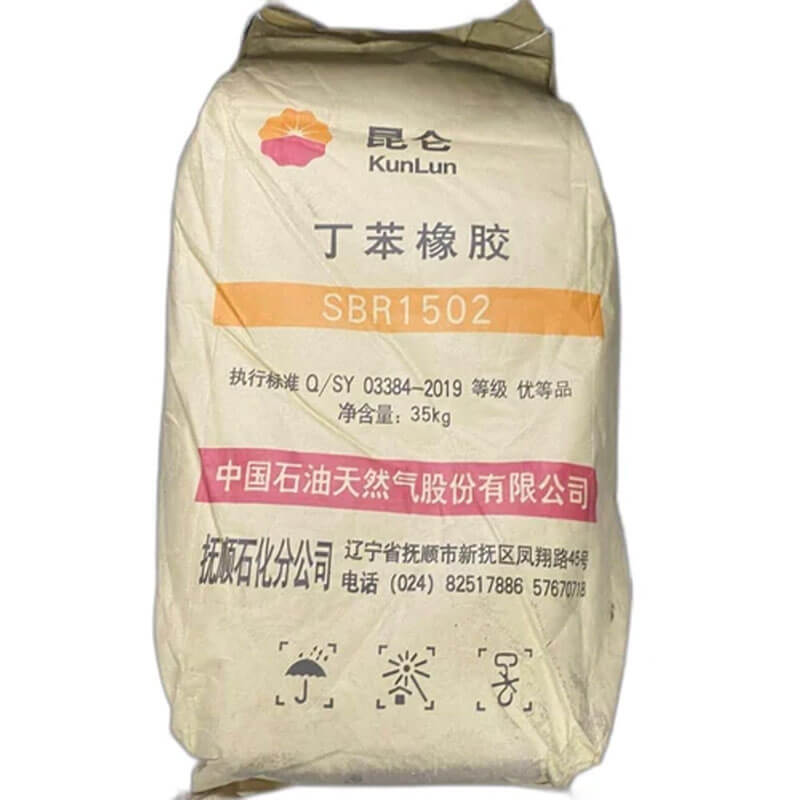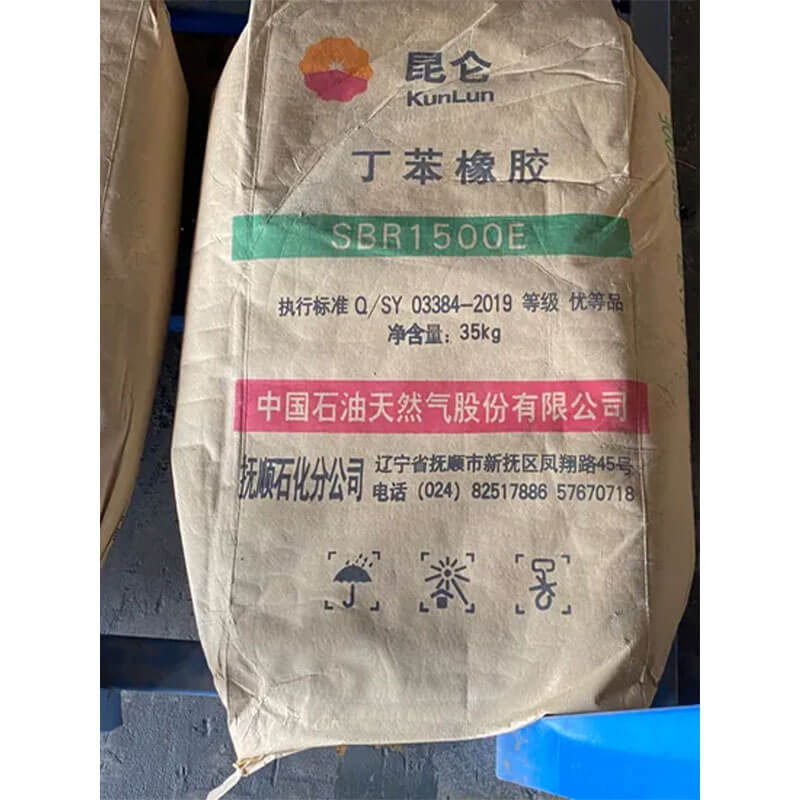
Styrene‑Butadiene Rubber SBR 1500E

    • Product Name: Styrene‑Butadiene Rubber SBR 1500E
    • Factroy Site: No. 45 Fengxiang Road, Xinfu District, Fushun City, Liaoning Province
    • Price Inquiry: sales4@ascent-chem.com
    • Manufacturer: PetroChina Fushun Petrochemical Company
    • CONTACT NOW
    Specifications
    HS Code 573292
    Product Name Styrene-Butadiene Rubber SBR 1500E
    Polymer Type Cold emulsion polymerized styrene-butadiene rubber
    Appearance Light colored, cream to slightly yellowish crumb or bale
    Bound Styrene Content 23.5% by mass
    Mooney Viscosity Ml 1 4 At 100 C 50 (typical range 45-55)
    Volatile Matter ≤ 0.75%
    Ash Content ≤ 0.75%
    Organic Acid Content 5.0 - 7.0%
    Soap Content ≤ 0.5%
    Specific Gravity 0.94
    Tensile Strength ≥ 25.0 MPa
    Elongation At Break ≥ 420%
    300 Modulus 13.0 - 18.5 MPa
    Antioxidant Type Non-staining

    As an accredited Styrene‑Butadiene Rubber SBR 1500E factory, we enforce strict quality protocols—every batch undergoes rigorous testing to ensure consistent efficacy and safety standards.

    Packing & Storage
    Packing SBR 1500E is packaged in 25 kg polyethylene-lined bags, palletized, stretch-wrapped, and shrink-wrapped for safe transport.
    Container Loading (20′ FCL) SBR 1500E in bales/boxes, 20′ FCL, tightly stowed to prevent shifting, ensuring safe transport and container integrity.
    Shipping Styrene-Butadiene Rubber SBR 1500E is shipped as solid bales, crumb, or pellets in polyethylene-lined polypropylene bags, octabins, or cardboard boxes. It is non-hazardous and not regulated as dangerous goods. Transport in clean, dry containers or trucks, protected from moisture, heat, and direct sunlight.
    Storage Store SBR 1500E in a cool, dry, well-ventilated area away from direct sunlight, heat sources, and ignition sources. Keep original packaging sealed and intact to prevent contamination and moisture absorption. Avoid prolonged storage above 30°C. Maintain good stock rotation to prevent aging or degradation. Ensure area is clean and compatible with general rubber storage guidelines.
    Shelf Life Shelf life is approximately 2 years when stored in a cool, dry, well-ventilated area away from direct sunlight and oxidizers.
    Application of Styrene‑Butadiene Rubber SBR 1500E

    In cold-emulsion styrene-butadiene copolymer production, SBR 1500E is selected for passenger car tire tread compounds where bound styrene is controlled at 22.5–24.5% and raw polymer Mooney viscosity ML 1+4 at 100°C is specified at 52 MU. This viscosity range permits acceptable filler acceptance during masterbatch mixing without excessive shear heating. On a 270 L net chamber tangential Banbury line, a two-stage mixing sequence is applied. In the first pass, 70 phr SBR 1500E, 30 phr high-cis polybutadiene, 45 phr N330 carbon black, 5 phr treated distillate aromatic extract, 3 phr zinc oxide, 2 phr stearic acid, 2 phr 6PPD, and 1 phr TMQ are charged at 40 rpm rotor speed. Ram pressure is held at 0.55 MPa. The masterbatch drop temperature is limited to 150°C. The compound is sheeted on a two-roll mill with a friction ratio of 1.15:1 and cooled to 40°C before the curative second pass. In the final pass, 1.8 phr sulfur, 1.2 phr TBBS, and 0.3 phr PVI are added at 35 rpm. Cure development is tracked by ASTM D2084 moving die rheometry at 160°C. Target torque difference MH−ML is 14–18 dN·m, and T90 is 4–6 min. Tensile strength measured on 2 mm cured sheets per ISO 37:2017 is typically above 18 MPa, with elongation at break 400–500%. Hardness per ISO 48-4 is 64–66 Shore A. Abrasion loss per DIN 53516 is 110–140 mm³ for this compound class. The processing boundary occurs above 150°C: scorch safety measured by Mooney t5 at 135°C drops below 10 min when dump temperature exceeds 155°C due to premature sulfur-accelerator interaction. Batch-to-batch Mooney variation greater than ±4 MU has been observed to shift die swell by ±8–10% and alter tread extrusion speed on a vacuum extruder with L/D 16:1.

    Property at 160°C cure70 phr SBR 1500E / 30 phr BR80 phr SBR 1500E / 20 phr BR60 phr SBR 1500E / 40 phr BR
    MH−ML per ASTM D208416.0 dN·m15.4 dN·m16.8 dN·m
    T905.2 min5.0 min5.5 min
    Tensile strength per ISO 37:201718.5 MPa17.2 MPa18.9 MPa
    Elongation at break per ISO 37:2017460%420%480%
    Hardness per ISO 48-465 Shore A66 Shore A64 Shore A
    DIN abrasion per DIN 53516120 mm³135 mm³115 mm³

    What Limits Direct Replacement of Natural Rubber in Multi-Ply Conveyor Belt Cover Compounds?

    Mining conveyor belt covers are specified under DIN 22102-1 for abrasive mineral slurries and impact cuts. SBR 1500E is introduced into cover compounds where weather aging stability and controlled tack are more critical than the highest tear resistance offered by natural rubber. A typical cover formulation contains 80 phr SBR 1500E, 20 phr high-cis polybutadiene, 50 phr N220 carbon black, 8 phr treated distillate aromatic extract, 5 phr zinc oxide, 2 phr stearic acid, 1.5 phr 6PPD, 1.2 phr sulfur, 1.1 phr CBS, and 0.2 phr PVI. Mixing is conducted in a 160 L intermeshing rotor mixer with a drop temperature of 130–140°C. Filler incorporation time is 90 s, with two ram raises. The stock is then calendered on a four-roll Z-calender at 55°C roll temperature to an 8 mm cover sheet. Adhesion to RFL-dipped nylon fabric is evaluated by ISO 252-1 adhesion strength after vulcanization at 150°C for 25 min. Cover compounds based on SBR 1500E exhibit tensile strength 16.5–17.8 MPa per ISO 37:2017 and tear strength 48–52 N/mm per ISO 812. Abrasion loss per DIN 53516 is 110–125 mm³. The limitation is apparent when troughing angle exceeds 45°: SBR 1500E covers warm up under cyclic flexing, and heat build-up measured by ISO 13934-1 on a dynamic test rig reduces cover service life before base-belt delamination occurs. Published data for specific underground coal conveyor configurations is limited, but plant operators report earlier edge-checking when SBR 1500E is used without natural rubber in the cover.

    Material or property80 phr SBR 1500E / 20 phr BR cover70 phr SBR 1500E / 30 phr BR cover60 phr SBR 1500E / 40 phr BR cover
    N220 carbon black50 phr50 phr50 phr
    Tensile strength per ISO 37:201716.5 MPa17.2 MPa17.8 MPa
    Elongation at break per ISO 37:2017450%470%500%
    Tear strength per ISO 81248 N/mm50 N/mm52 N/mm
    Hardness per ISO 48-468 Shore A66 Shore A65 Shore A
    Abrasion loss per DIN 53516118 mm³125 mm³110 mm³

    Extrusion Rheology and Die Swell Management in EPDM/SBR 1500E Coextrudates

    Automotive weatherseal and industrial profile lines use SBR 1500E in blends with EPDM to recover green strength without sacrificing ozone resistance. The compound is processed on a cold-feed vented extruder with L/D 20:1 and screw compression ratio 1.6:1. Barrel temperature zones are set at 45°C, 55°C, 65°C, and 70°C, with a head temperature of 80°C. Screw speed is maintained between 35 rpm and 55 rpm. Under these conditions, die swell for a 60 phr SBR 1500E / 40 phr EPDM compound falls between 35% and 50%. A typical profile formulation contains 60 phr SBR 1500E, 40 phr EPDM, 80 phr N550 carbon black, 40 phr precipitated calcium carbonate, 30 phr paraffinic oil, 5 phr zinc oxide, 1 phr stearic acid, 1.8 phr sulfur, 0.8 phr MBT, 0.8 phr TMTD, and 0.5 phr ZDBC. Cure response at 160°C by ASTM D2084 gives MH−ML of 12–15 dN·m and T90 of 5–7 min. Ozone resistance is assessed under ISO 1431-1:2017 at 50 pphm ozone and 40°C for 1,000 h; the 40 phr EPDM level prevents cracking at 20% elongation. The process conflict is scorch in the SBR phase: TMTD above 0.8 phr reduces Mooney t5 at 135°C below 8 min, causing surface roughness on the profile after die exit. Sulfur partitioning between EPDM and SBR is another limiting factor; phase migration reduces tensile strength unless the EPDM is pre-mixed with carbon black before SBR 1500E is added. On a production line, batch-to-batch Mooney variation in SBR 1500E of ±3 MU shifts die swell by ±6%, requiring die plate adjustment on the vacuum calibrator.

    Microcellular soling compounds based on SBR 1500E are processed on hydraulic presses at 160°C with azodicarbonamide as blowing agent. A dense soling formulation includes 80 phr SBR 1500E, 20 phr standard Malaysian natural rubber, 35 phr precipitated silica, 3 phr PEG 4000, 5 phr naphthenic oil, 3 phr zinc oxide, 1.5 phr stearic acid, 2.0 phr sulfur, 1.5 phr TBBS, and 0.8 phr DPG. Moving die rheometry at 160°C per ASTM D2084 indicates T90 of 5.5–7 min. Hardness is 65 Shore A per ISO 48-4, and DIN abrasion loss is ≤150 mm³ per DIN 53516. Compression set after 22 h at 70°C per ISO 815-1:2019 is 23%. Flex crack initiation under ASTM D813-20 at a 2.5 mm cut is recorded at 10,000 cycles, though published data for this exact formulation is limited. The soling compound is not suitable for oil-resistant safety footwear where nitrile rubber is required under EN ISO 20345:2023. The processing window is constrained by silica dispersion: incomplete silanization leads to hardness variation of ±5 Shore A across a press platen. Pre-blending SBR 1500E with silica in an internal mixer before adding natural rubber reduces this variation to ±2 Shore A.

    When Solvent-Borne Contact Adhesives Demand Controlled Green Strength with Rosin-Acid SBR

    SBR 1500E dissolves readily in a solvent blend of toluene, methyl ethyl ketone, and n-hexane at 60:20:20 to a solids content of 20%. Brookfield viscosity at 25°C using spindle 4 at 20 rpm is 4,000–8,000 mPa·s. A production-scale dissolver with a closed jacket and nitrogen purge operates at 400 rpm. The adhesive formulation contains 100 phr SBR 1500E, 100 phr C5 aliphatic tackifier, 3 phr zinc oxide, 2 phr octylated diphenylamine, and 0.5 phr aromatic polymer plasticizer. Peel adhesion after 3 days at 23°C and 50% RH is evaluated per ASTM D903 on galvanized steel; acceptable production lots yield ≥30 N/25 mm. Green strength is evaluated by shear resistance after 30 s open time at 23°C, measured on a 2 kg weight-activated bond area. Solvent recovery systems using activated carbon beds reduce emissions below the VOC thresholds required under the EU Solvent Emissions Directive, but the adhesive remains unsuitable for low-VOC formulations where aqueous dispersions are required. The rosin acid emulsifier in SBR 1500E contributes to higher initial tack than fatty acid SBR grades, but it also increases sensitivity to moisture during film drying. Adhesive batches exposed to relative humidity above 60% during solvent evaporation develop micro-bubbling and peel strength drops by 15–20%. Contact with amine-containing substrates accelerates oxidative discoloration of the C5 resin; phenolic antioxidants are not sufficient to prevent this interaction.

    Rubber-covered steel mill rolls use SBR 1500E in hardness ranges from 80 Shore A to 95 Shore A. The base compound is mixed at 70–80 phr N330 carbon black and 30–50 phr hard clay, with 10 phr coumarone-indene resin to improve building tack. Calendered sheets of 4 mm thickness are wrapped on sandblasted steel cores and cured in an autoclave at 140°C under saturated steam for 3 h. Bond strength to primed metal is evaluated by ASTM D429 method B; production control requires ≥12 N/mm adhesion. Roll cover compounds containing SBR 1500E are used in paper mill felt rolls and textile processing rolls where mineral acids are absent. The operational boundary is chemical exposure: SBR 1500E is not suitable for chromic acid pickling lines, where chloroprene rubber is specified. Published data for specific paper machine positions is limited, but service reports indicate that high-hardness SBR 1500E covers show catastrophic debonding when roll surface temperature exceeds 95°C during nip deflection. This failure mode is associated with coefficient of thermal expansion mismatch between the steel core and the rubber cover under continuous frictional heat load.

    Quantifying Compression-Set Thresholds in Anti-Vibration Pads and Machinery Mounts

    Industrial anti-vibration pads for fans, compressors, and punching presses use SBR 1500E where low cost and controlled hysteresis are required. A typical mounting compound contains 100 phr SBR 1500E, 55 phr N550 carbon black, 20 phr precipitated silica, 15 phr naphthenic oil, 5 phr zinc oxide, 2 phr stearic acid, 1.5 phr sulfur, 1.2 phr CBS, and 0.2 phr PVI. Curing is performed in compression molds at 150°C for 20 min. Compression set per ISO 815-1:2019 after 72 h at 70°C is 28–32%. Dynamic stiffness and damping are measured under ISO 10846-3:2018 on a servohydraulic test stand with a preload of 0.5 MPa. Damping coefficient at 10 Hz is 0.15–0.20. The limitation for underhood or marine use is oil and ozone resistance; EPDM or NBR is required for sustained contact with mineral oil or atmospheric ozone above 200 pphm. On manufacturing floors, batch-to-batch variation in filler dispersion causes compression set drift of ±3%, which changes spring stiffness by ±5%. Incoming SBR 1500E with Mooney viscosity below 48 MU produces soft pads and increases creep under continuous load; Mooney viscosity above 56 MU raises mixing torque and reduces filler incorporation consistency.

    Free Quote

    Competitive Styrene‑Butadiene Rubber SBR 1500E prices that fit your budget—flexible terms and customized quotes for every order.

    For samples, pricing, or more information, please contact us at +8618136850665 or mail to sales4@ascent-chem.com.

    We will respond to you as soon as possible.

    Tel: +8618136850665

    Email: sales4@ascent-chem.com

    Inquiry

    Get Free Quote of PetroChina Fushun Petrochemical Company

    Flexible payment, competitive price, premium service - Inquire now!

    Certification & Compliance
    More Introduction

    Styrene‑Butadiene Rubber SBR 1500E is a cold-emulsion polymerized general-purpose elastomer supplied in bale form. The grade is manufactured with a mixed fatty acid and rosin acid emulsifier package, which leaves a residual organic acid content above that of non-staining SBR 1502 and contributes measurable building tack and filler wetting during mill and internal-mixer compounding. Commercial certificates of analysis for SBR 1500E typically report bound styrene in the range 22.5%–24.5% when measured in accordance with ISO 2453:2020, and Mooney viscosity ML 1+4 at 100 °C between 46 MU and 58 MU when measured under ISO 289-1:2017. The material is not oil extended and is supplied with a nominal bale mass of 35 kg. Raw-polymer volatiles, ash, soap, and organic acid limits are standard acceptance criteria under ISO 2322:2023 and ASTM D3185-21. Because SBR 1500E is a staining grade, it is normally directed toward black or dark-coloured technical rubber products rather than white or transparent formulations. Typical end uses include tire retread compounds, conveyor belt covers, footwear soling, moulded mechanical goods, flooring base mats, and general rubber sheeting. The higher rosin acid residue distinguishes it from SBR 1502, which is the preferred non-staining emulsion SBR, while the absence of aromatic process oil distinguishes it from SBR 1712.

    Because cold-emulsion polymerization is typically terminated at 60–65% conversion, SBR 1500E retains a broader molecular weight distribution and higher branching than solution-polymerized SBR grades. The polymerization temperature below 10 °C reduces gel formation and improves tensile properties compared with hot-emulsion SBR. Residual fatty acid and rosin acid soaps are converted to organic acids during coagulation and washing. These acids act as weak cure retarders and also plasticize the uncured compound, which is why the organic acid specification is monitored closely in production lots.

    Raw-Polymer Acceptance Limits and the ISO 2322 Evaluation Framework

    Acceptance testing of SBR 1500E is built around the raw-polymer methods and the standard evaluation recipe in ISO 2322:2023. Table 1 summarizes the typical commercial limits. Values should be read as producer-specific release ranges rather than universal specifications; different production lines may narrow or shift the Mooney viscosity band within the stated range.

    PropertyTest methodTypical acceptance range
    Bound styreneISO 2453:202022.5%–24.5%
    Mooney viscosity ML 1+4 at 100 °CISO 289-1:201746–58 MU
    Volatile matterISO 248-1:2011≤0.75%
    AshISO 247-2:2019≤0.50%
    Organic acidISO 7781:20175.0%–7.5%
    SoapISO 7781:2017≤0.50%

    The organic acid and soap values are not incidental. They control compound tack, extrusion die swell, and the scorch response of accelerated sulphur cures. When a production lot approaches the upper organic acid limit, mixers often observe softer uncured stock and an increased tendency to back-roll bagging on open mills unless roll temperature is reduced. Conversely, lots near the lower acid limit may show reduced building tack in tire retread cushion gum.

    Plant-scale compounding of SBR 1500E in a 270 L intermeshing Banbury mixer with a net fill factor of 0.75 has been reported to run effectively in a two-stage sequence. The masterbatch stage uses rotor speeds of 45–55 rpm and ram pressure of 0.55–0.65 MPa; dump temperatures are held below 160 °C to prevent gel formation and broadening of Mooney viscosity. When the first-stage dump temperature exceeds 160 °C, batch-to-batch Mooney variation can increase from ±2 MU to ±5 MU on the next stage. The final stage, containing sulphur and accelerator, is controlled at 35–40 rpm with a dump temperature below 105 °C to preserve scorch safety. On open mills, a friction ratio of 1:1.2 and front-roll temperature of 45–55 °C produce a stable band; raising the roll surface above 70 °C induces tack and band tearing because the rosin acid residue softens the uncured polymer. Compounds containing soap close to the upper 0.50% acceptance limit tend to release more cleanly from mill rolls but exhibit lower green tack at room temperature.

    Why Does SBR 1500E Retain More Acid Than SBR 1502?

    The distinction is mainly a function of the emulsifier system. SBR 1500E is produced with a rosin acid-containing emulsifier, leaving organic acid in the 5.0%–7.5% range, while SBR 1502 is manufactured with a mixed fatty acid/rosin acid or predominantly fatty acid system that lowers organic acid to ≤1.0% and reduces staining. The consequence of the higher acid residue is not cosmetic alone: SBR 1500E provides greater building tack and faster filler incorporation in black compounds, but it is unsuitable for white or brightly coloured products because the residual acid can contribute to discolouration and lower light stability. SBR 1712 shares the general SBR polymer backbone but is oil extended with 37.5 phr aromatic oil, giving it lower polymer concentration and altered mixing behaviour in high-volume tire tread compounds.

    GradeBound styreneOrganic acidSoapOil contentMooney ML 1+4 at 100 °C
    SBR 1500E22.5%–24.5%5.0%–7.5%≤0.50%None46–58 MU
    SBR 150222.5%–24.5%≤1.0%≤0.50%None46–58 MU
    SBR 171222.5%–24.5%4.5%–6.5%≤0.50%37.5 phr aromatic42–52 MU

    Compared with oil-extended SBR 1712, SBR 1500E has higher polymer concentration per unit mass and therefore requires less formulation adjustment when used as a direct partial replacement for natural rubber. SBR 1712 is preferred when filler and oil loadings are high because its oil content reduces compound viscosity and permits faster incorporation of large black loadings. SBR 1502 is selected when staining is unacceptable and lower acid content is needed for light-coloured injection-moulded parts.

    Under the ISO 2322:2023 evaluation recipe—100 phr polymer, 50 phr N330 carbon black, 3 phr zinc oxide, 1 phr stearic acid, 1.75 phr sulphur, and 1 phr TBBS—the sulphur cure response of SBR 1500E is conventionally assessed after press cure at 145 °C for 35 min. Under these conditions, tensile strength of 25.5–30.0 MPa and elongation at break of 380–480% are representative of commercial certificates when tested according to ISO 37:2017. Modulus at 300% elongation is typically 14.0–17.0 MPa, and hardness is 68–72 Shore A under ISO 48-4:2018. These values are not intrinsic polymer constants; they depend on mixer dispersion quality, storage conditions, and cure accelerator ratio.

    Moving-die rheometer testing at 160 °C, 1 ° arc, and 100 cpm under ASTM D5289-19a typically gives ts2 of 3–5 min and t90 of 10–14 min for the standard sulphur/TBBS recipe. These cure indices shift when the TBBS level is varied by 0.2 phr; a reduction to 0.8 phr lengthens t90 by approximately 2–3 min, whereas an increase to 1.2 phr shortens t90 and reduces scorch margin. Because the polymer contains residual rosin acid, cure rates are slightly retarded relative to low-acid SBR 1502 at equivalent accelerator loadings. Formulations must be adjusted by 0.1–0.2 phr of accelerator to match the same t90 when switching between the two grades.

    When High-Humidity Storage and Open-Mill Over-Shear Intersect

    Cold bales moved from a warehouse below 10 °C into a mixing room above 28 °C and 80% RH can form surface condensation. If the condensed moisture is folded into the Banbury charge, press-cured parts can show porosity or non-fill defects at the mould cavity periphery. Conditioning packaged bales at 23 ±3 °C for 24 h before opening reduces this failure mode. Storage in unopened polyethylene wrap should avoid direct sunlight and proximity to ozone-generating electric motors; ozone attack on the bale surface can create gel skins that remain visible as hard specks in thin-gauge sheeting. The product must not be combined with copper naphthenate or manganese-based adhesion promoters in oxidative service, because transition-metal ions accelerate chain scission and shorten vulcanizate life. For light-coloured or food-contact applications, SBR 1500E is not appropriate without migration testing under the relevant national or regional framework; raw SBR 1500E is not a food-contact material by itself. Pre-drying is not normally required when volatile matter is maintained at or below 0.75%, but compounds exposed to high ambient humidity during open-mill storage should be sheeted and conditioned before extrusion.

    In tire retread compounding, SBR 1500E is used as a partial replacement for natural rubber in cushion gum and tack-enhanced ply compounds. The higher organic acid content supports green tack retention during lay-up on buffed casings; however, the grade’s staining character excludes it from white sidewall or whitewall cover strips. Conveyor belt cover compounds are produced with 45–55 phr N220 carbon black and a sulphur donor system and are calendered at stock temperatures below 80 °C to maintain dimensional stability. Published caliper tolerance data for this specific configuration are limited, but production experience indicates that Mooney viscosity in the 46–58 MU window reduces edge-lift and parting-line flow during belt splicing. For footwear soling, SBR 1500E is blended with high-styrene resin masterbatch to raise hardness and abrasion resistance; the blend is Banbury-mixed, sheeted, and pre-cut before compression or injection moulding. In injection moulding, stock temperatures above 120 °C should not be sustained for more than 5 min before injection because scorch time declines as the compound approaches cure temperature.